
What Is Tannin Bleed?
Tannin Bleed is a wood stain that rises through paint and leaves yellow, brown, or reddish marks on the surface. The discoloration often appears over knots, raw wood, or joints. Moisture can draw tannins toward the coating, so regular paint may not hide the marks for long without the right primer.
Quick Facts About Tannin Bleed
Category
Wood-related paint defect
Used for
Identifying stains that rise through paint
Common confusion
Mistaken for poor paint coverage
Also called
Tannin Staining, Tannin Bleeding
Often discussed with
Cabinet Painting
Key Takeaways About Tannin Bleed
- Tannin bleed often appears near knots, joints, and unfinished wood.
- Moisture can pull wood color through a fresh paint film.
- Tannin bleed is not the same as ordinary paint color variation.
How Tannin Bleed Works
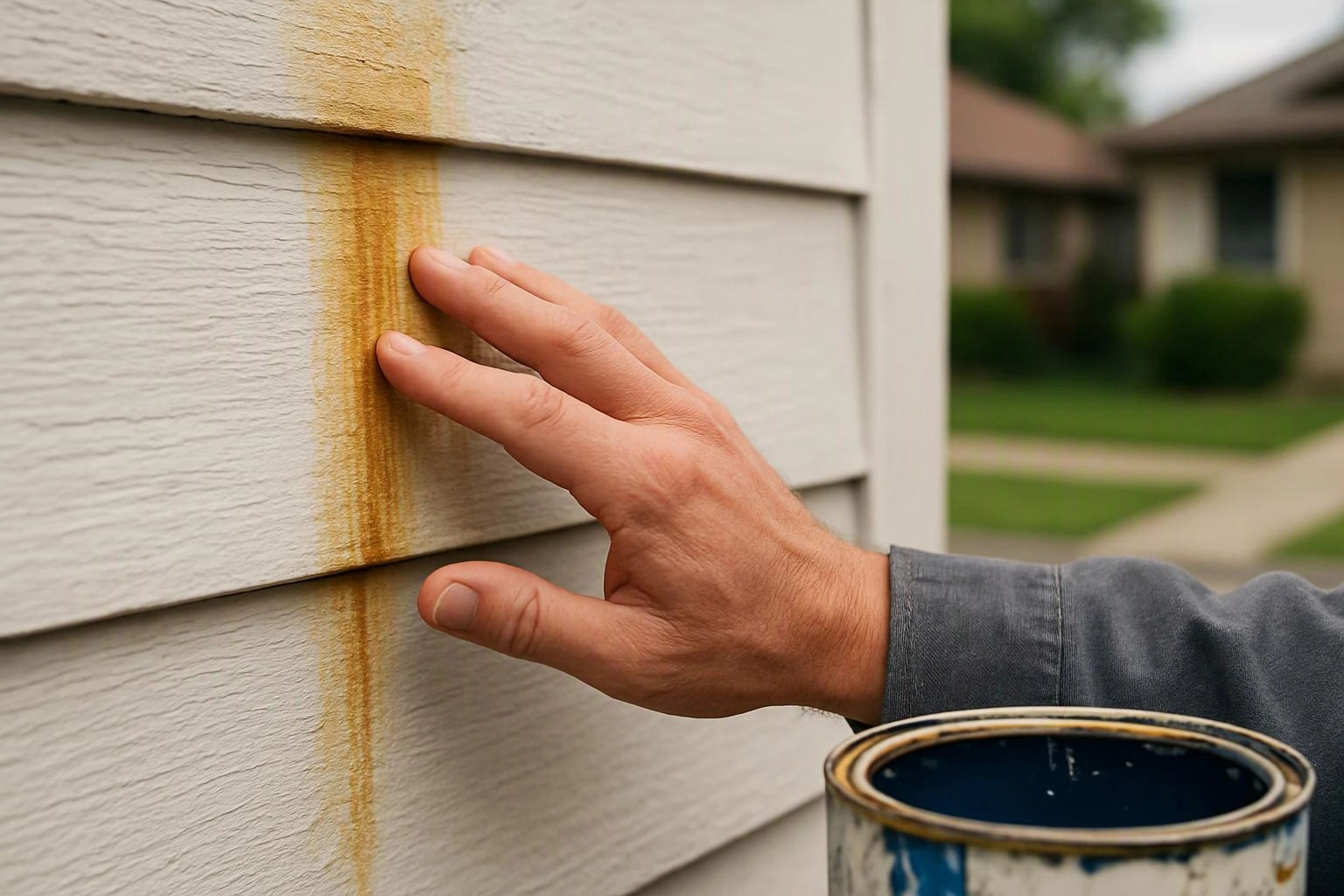
Tannin bleed starts when natural color compounds in wood move toward the painted surface. Knots, end grain, and exposed wood contain more of these compounds. Moisture can speed that movement, especially when the wood has not been sealed.
Related glossary terms: Stain Blocker, Primer, Cabinet Grain.
Regular wall or cabinet paint may cover the wood at first, but the stain can return as the coating dries. A stain blocker creates a stronger barrier before the finish coats go on. Surface cleaning, light sanding, and spot priming help the barrier bond to the wood.
On painted cabinets, bleed-through may look like small amber spots or broad brown shadows. The marks can show through light colors more clearly than dark colors, so the preparation plan should match the wood and finish.
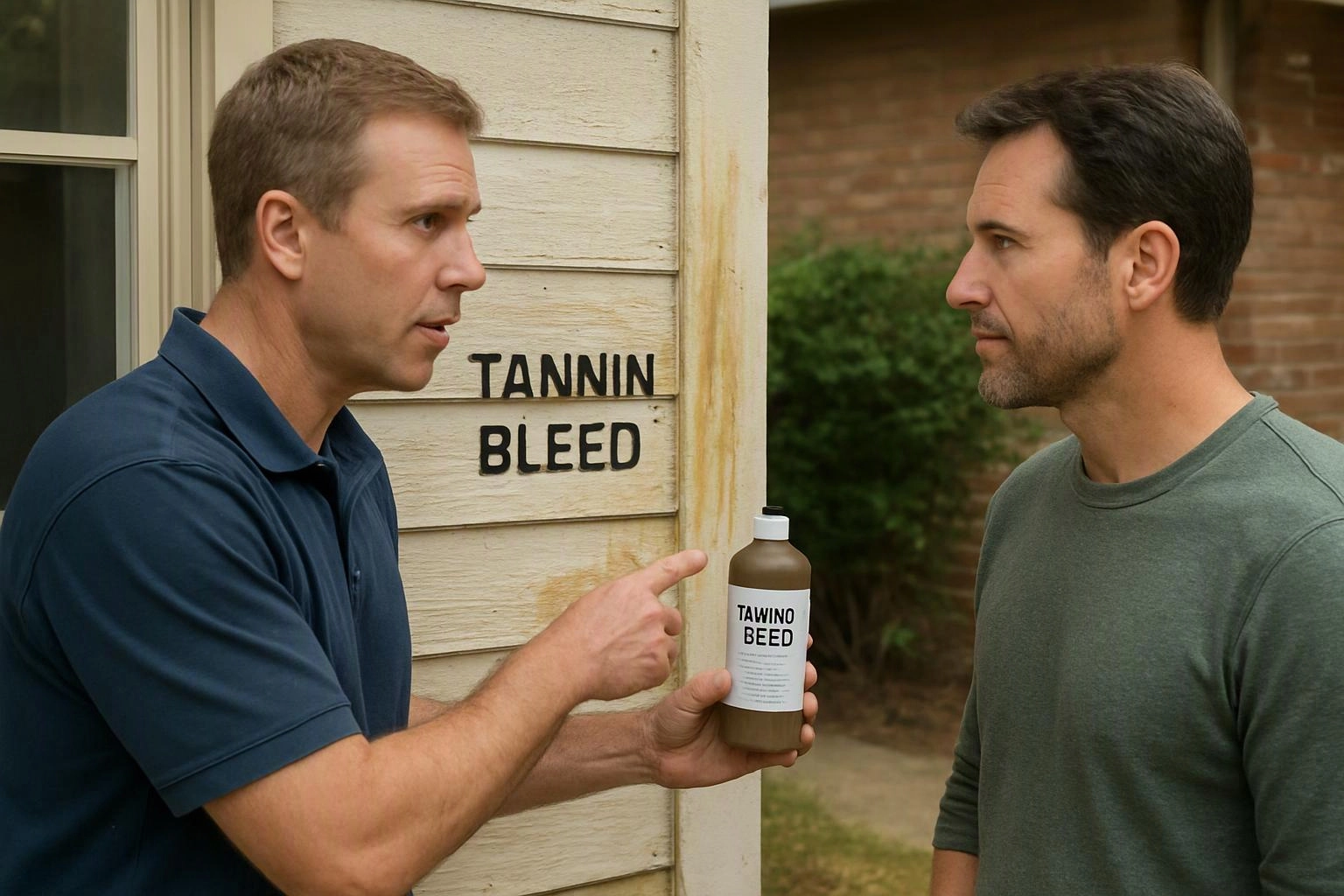
Expert Note
When we inspect cabinets, we look for knots, exposed wood, and stains that may return through paint. We prepare those areas with cleaning, sanding, and a suitable stain-blocking primer. We also check the surface after priming before applying the finish coats.
Tannin Bleed in Practice: A Real-World Example
A kitchen cabinet door made from knotty wood may develop amber spots after it receives a light paint color. The painter can isolate the affected areas with stain-blocking primer before applying the cabinet finish.
Related Services
Related Terms
Stain Blocker
A stain blocker is a primer or coating that seals discoloration so it does not show…
Primer
Primer is a preparatory coating applied before paint to help create an even, stable surface. It…
Cabinet Grain
Cabinet Grain is the visible pattern and texture formed by wood fibers on a cabinet surface…
Paint Adhesion
Paint Adhesion is the bond that holds a coating to a surface after the paint dries…
PainterRedmondwa.com
Have Questions About Tannin Bleed?
Contact PainterRedmondwa.com for practical guidance on Tannin Bleed and related painting contractor work in Redmond.