
What Is Wood Rot?
Wood Rot is the decay of wood caused by fungi that grow when wood stays damp. The decay weakens fibers and can leave boards soft, cracked, hollow, or crumbly. On painted siding, wood rot often starts where water enters joints, trim edges, fastener holes, or damaged coatings.
Quick Facts About Wood Rot
Category
Moisture-related wood decay
Used for
Identifying damaged siding and trim
Common confusion
Mildew or surface staining
Also called
Dry Rot, Wood decay
Often discussed with
Siding contractor
Key Takeaways About Wood Rot
- Soft, crumbly wood may signal decay beneath the paint.
- Fixing the moisture source helps prevent continued damage.
- Wood rot is not the same as surface mildew.
How Wood Rot Works
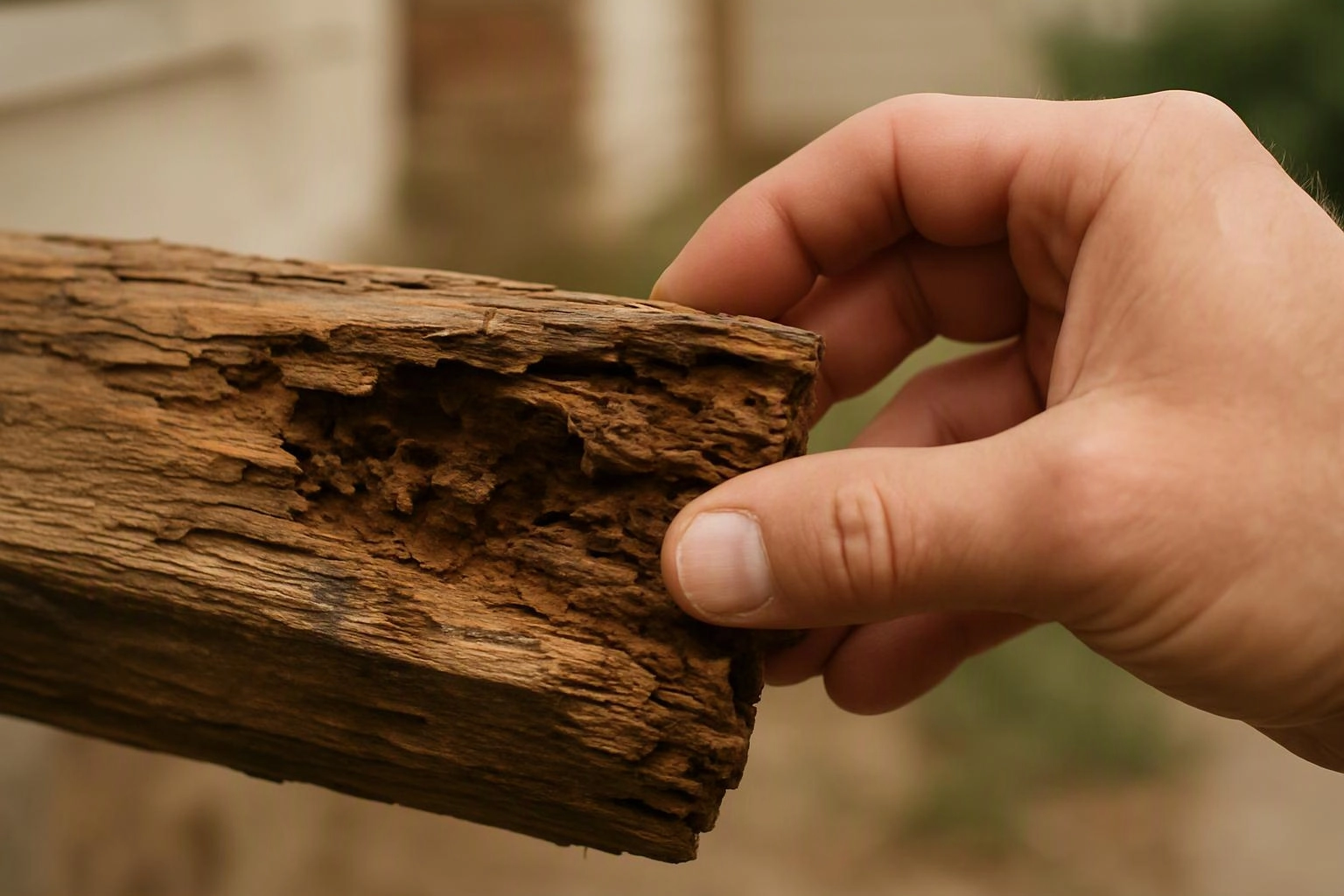
Wood Rot develops when moisture remains inside wood long enough for decay fungi to grow. The fungi break down the wood fibers, so the affected area loses strength and texture. Paint may still cover the surface while damage spreads underneath.
Related glossary terms: Caulking, Fascia, Peeling Paint.
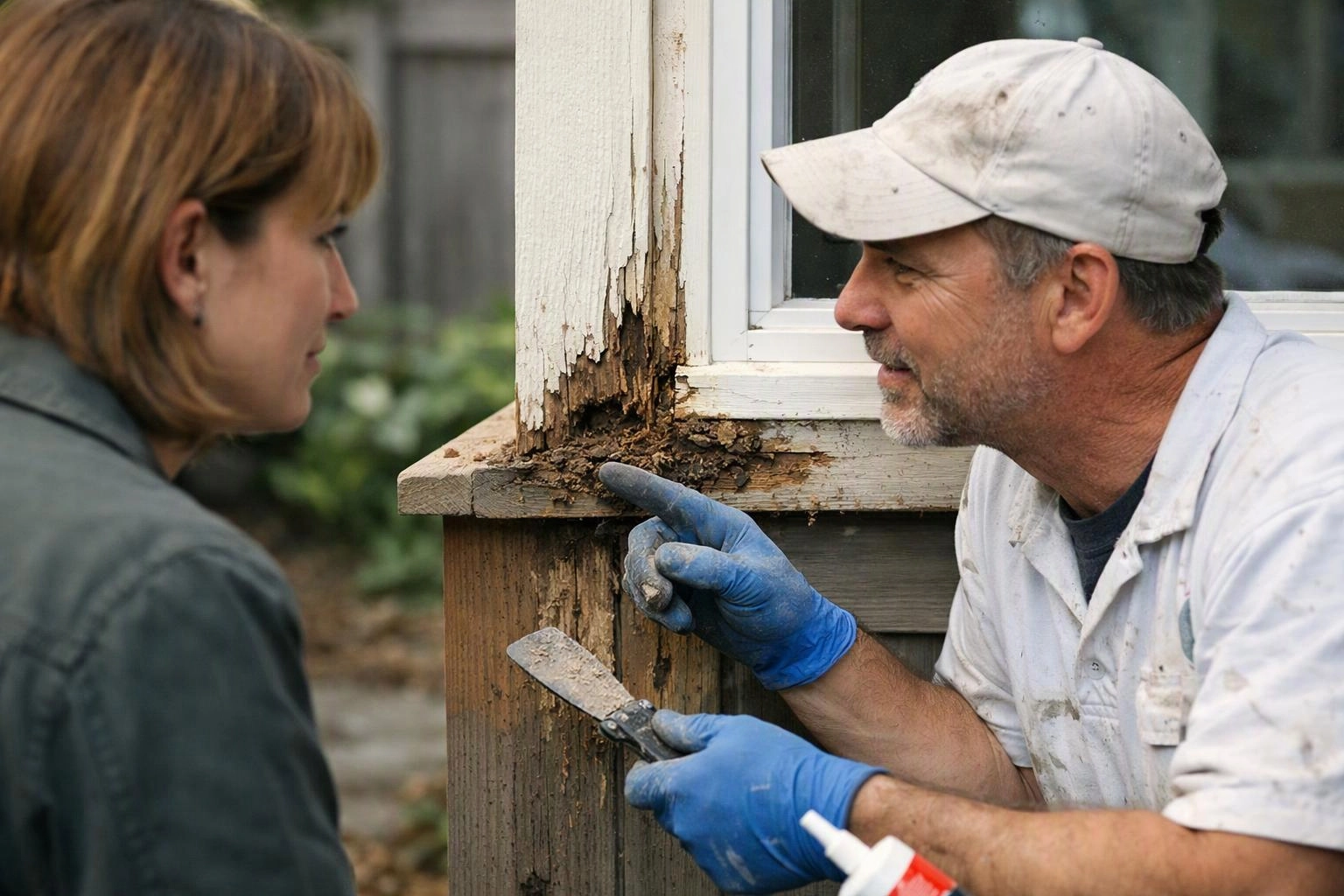
Moisture often enters through open seams, failed caulk, cracked paint, or exposed end grain. A siding contractor checks suspicious areas by looking for soft spots, swelling, discoloration, and crumbling edges. A careful probe can show whether the wood feels solid or gives way.
Surface mildew usually changes the color of paint or wood but does not remove the wood's structure. Wood rot changes the material itself. Repairs may involve removing damaged wood, correcting the water entry point, preparing sound surfaces, and applying a suitable primer and finish.
Expert Note
When we inspect siding, we check soft areas, exposed end grain, joints, and places where water may collect. We separate surface staining from damaged wood, then prepare only sound surfaces before painting. We also look for the moisture path so a new coating does not simply cover an active problem.
Wood Rot in Practice: A Real-World Example
A painted siding board beside a window may look intact but feel soft near its lower edge. We would trace the moisture entry, remove unsound material as needed, and prepare the remaining surface before coating it.
Related Terms
Caulking
Caulking is a flexible sealant applied along joints, gaps, and cracks to block water and air…
Fascia
Fascia is a long, straight board or trim piece fixed along the lower edge of a…
Peeling Paint
Peeling paint is a coating that has lost its bond with the surface beneath it and…
Primer
Primer is a preparatory coating applied before paint to help create an even, stable surface. It…
PainterRedmondwa.com
Have Questions About Wood Rot?
Contact PainterRedmondwa.com for practical guidance on Wood Rot and related painting contractor work in Redmond.