
What Is Efflorescence?
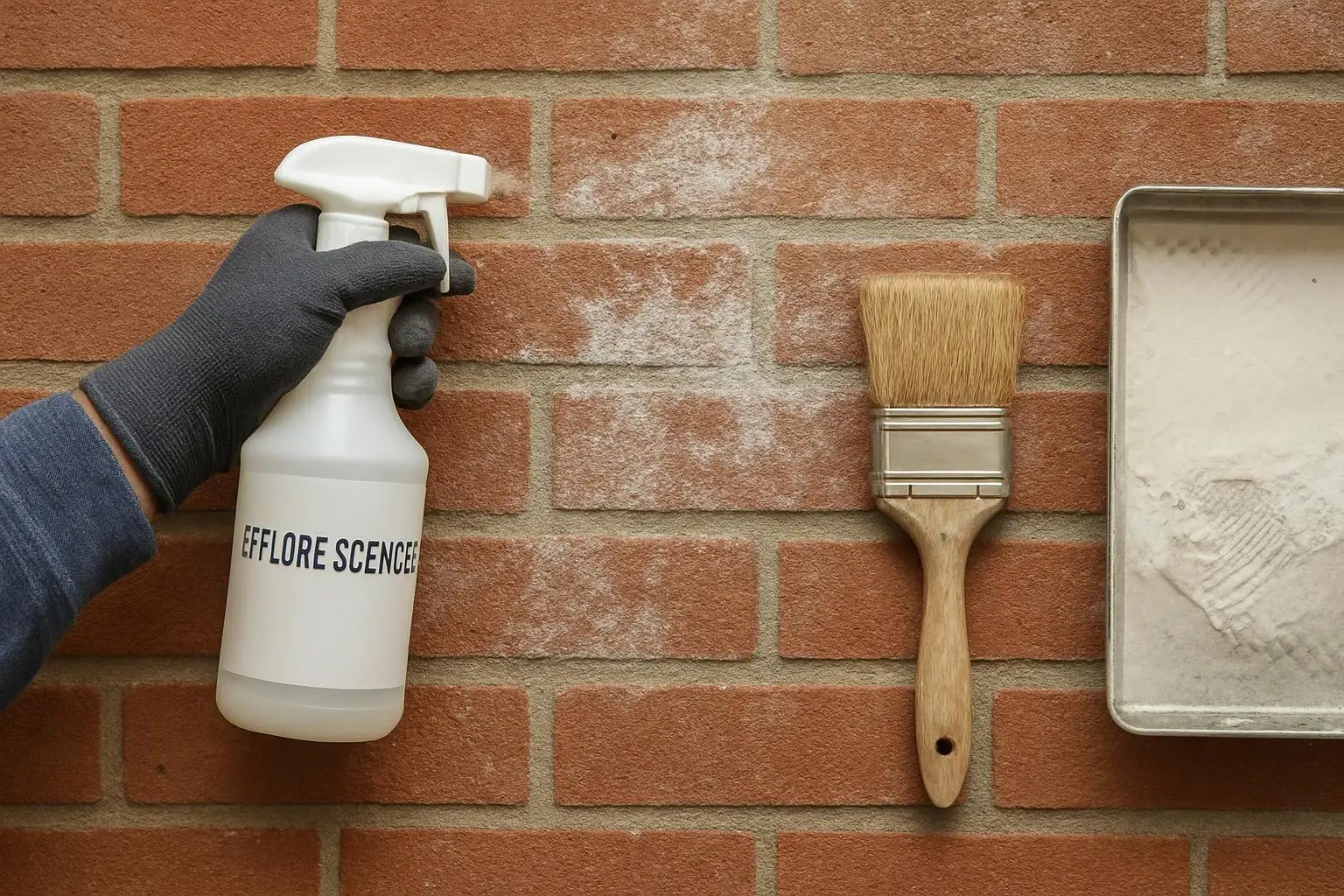
Efflorescence is a white, powdery deposit left when water carries dissolved salts through masonry, concrete, stucco, or other porous surfaces. As the water reaches the surface and dries, the salts remain behind. The deposit usually signals moisture movement beneath or behind the painted surface, not a paint color defect.
Quick Facts About Efflorescence
Category
Moisture-related surface deposit
Used for
Identifying salt deposits before painting
Common confusion
Often mistaken for mildew or chalking
Also called
Salt deposit
Often discussed with
Exterior Painting
Key Takeaways About Efflorescence
- It often appears as a dry, chalky crust on masonry.
- Cleaning alone won't stop deposits if moisture keeps moving.
- Efflorescence isn't the same as peeling paint or mildew.
How Efflorescence Works

Efflorescence forms when moisture moves through a porous building material and carries dissolved salts toward the surface. After the water evaporates, the salts remain as a pale film, crust, or powder. The pattern may appear on concrete walls, stucco, brick, or masonry foundations.
Related glossary terms: Paint Adhesion, Primer, Peeling Paint.
Paint can hide the deposit for a short time, but moisture can push the salts back through the coating. Surface preparation must address the visible residue and the conditions that let water enter. A painter may brush or wash the surface, allow it to dry, and check for continued moisture movement before applying a suitable primer and exterior coating. Paint adhesion becomes a key concern when residue remains beneath new paint.
Expert Note
When we find efflorescence, we check nearby masonry joints, cracks, drainage paths, and surface moisture. We remove loose deposits and assess whether the surface is dry and sound before priming. Our team treats the deposit as a moisture clue, not as a simple stain to cover.
Efflorescence in Practice: A Real-World Example
A stucco wall beside a walkway develops pale, crusty marks after repeated wet weather. Before exterior painting, the surface needs cleaning and a check for water entry so the coating does not trap the problem.
Related Services
Related Terms
Paint Adhesion
Paint Adhesion is the bond that holds a coating to a surface after the paint dries…
Primer
Primer is a preparatory coating applied before paint to help create an even, stable surface. It…
Peeling Paint
Peeling paint is a coating that has lost its bond with the surface beneath it and…
Mildew-Resistant Paint
Mildew-Resistant Paint is a coating made with additives that help slow mildew growth on painted surfaces…
PainterRedmondwa.com
Have Questions About Efflorescence?
Contact PainterRedmondwa.com for practical guidance on Efflorescence and related painting contractor work in Redmond.