
What Is Elastomeric Coating?
Elastomeric Coating is a flexible exterior finish that stretches and contracts with small surface changes. The coating forms a thick, weather-resistant film over materials such as stucco, masonry, and some siding. It can bridge fine surface cracks, but it cannot repair structural movement, active leaks, or damaged building materials.
Quick Facts About Elastomeric Coating
Category
Flexible exterior coating
Used for
Stucco, masonry, and suitable siding
Common confusion
It is not a waterproofing repair system
Also called
Elastomeric Paint, Flexible masonry coating
Often discussed with
Exterior Painting
Key Takeaways About Elastomeric Coating
- Its flexible film can bridge fine, stable cracks.
- Proper surface preparation controls adhesion and appearance.
- Elastomeric coating is not a structural crack repair.
How Elastomeric Coating Works
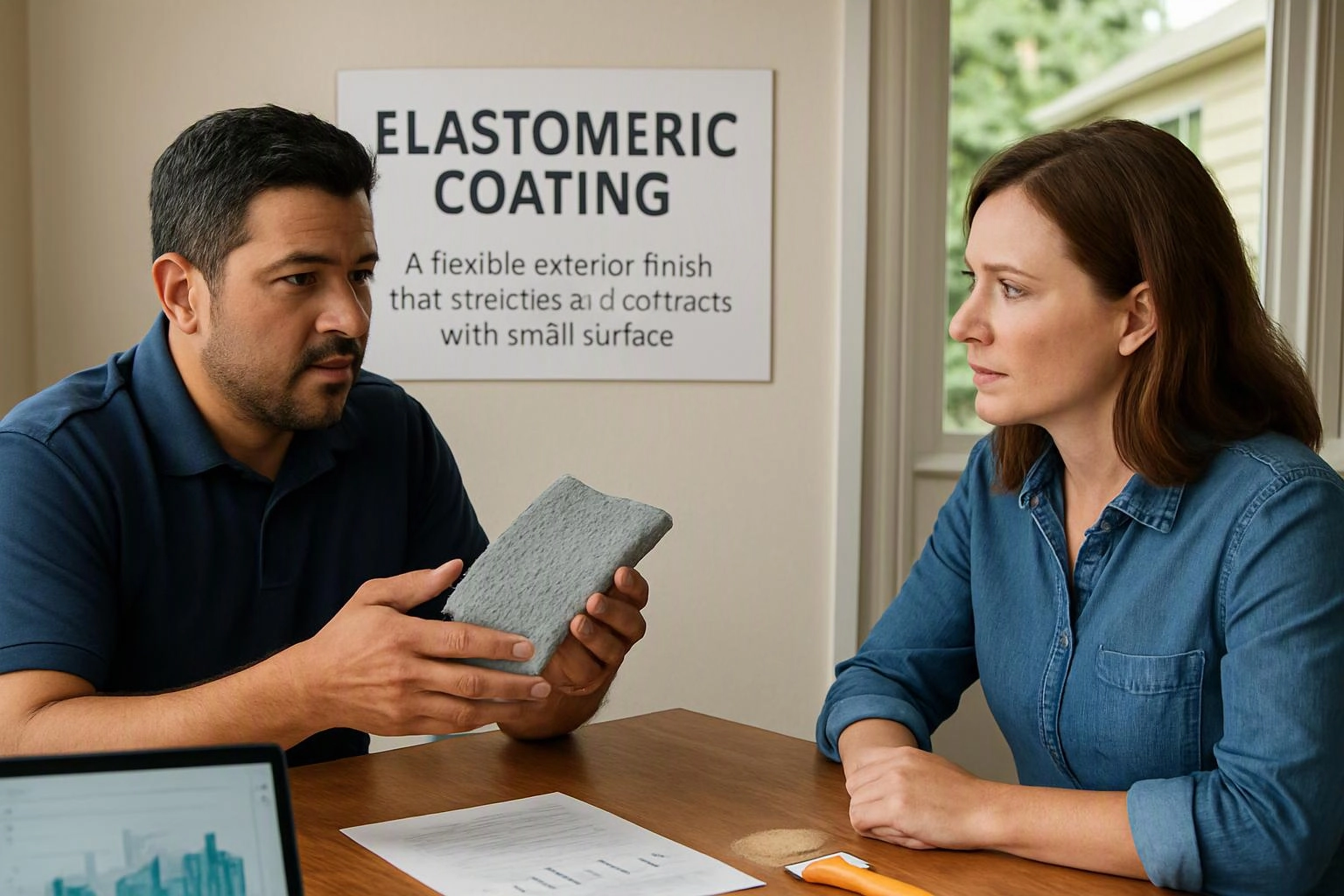
Elastomeric coating dries into a flexible film that can move slightly as the surface expands and contracts. The film helps seal small surface openings and slows water entry through sound, properly prepared materials.
Related glossary terms: Surface Preparation, Paint Adhesion, Chalking.
Application starts with cleaning, scraping, and repairing loose or damaged areas. The coating must bond to a dry, stable surface. Surface preparation affects adhesion, coverage, and the final texture. A contractor may use a roller, brush, or sprayer based on the surface and nearby areas.
Paint adhesion depends on removing chalk, dirt, failing paint, and other bond-breaking material. Large cracks, rot, and movement need separate repairs before coating work begins. The finished surface may look more uniform, but the coating will not correct major defects underneath.
Expert Note
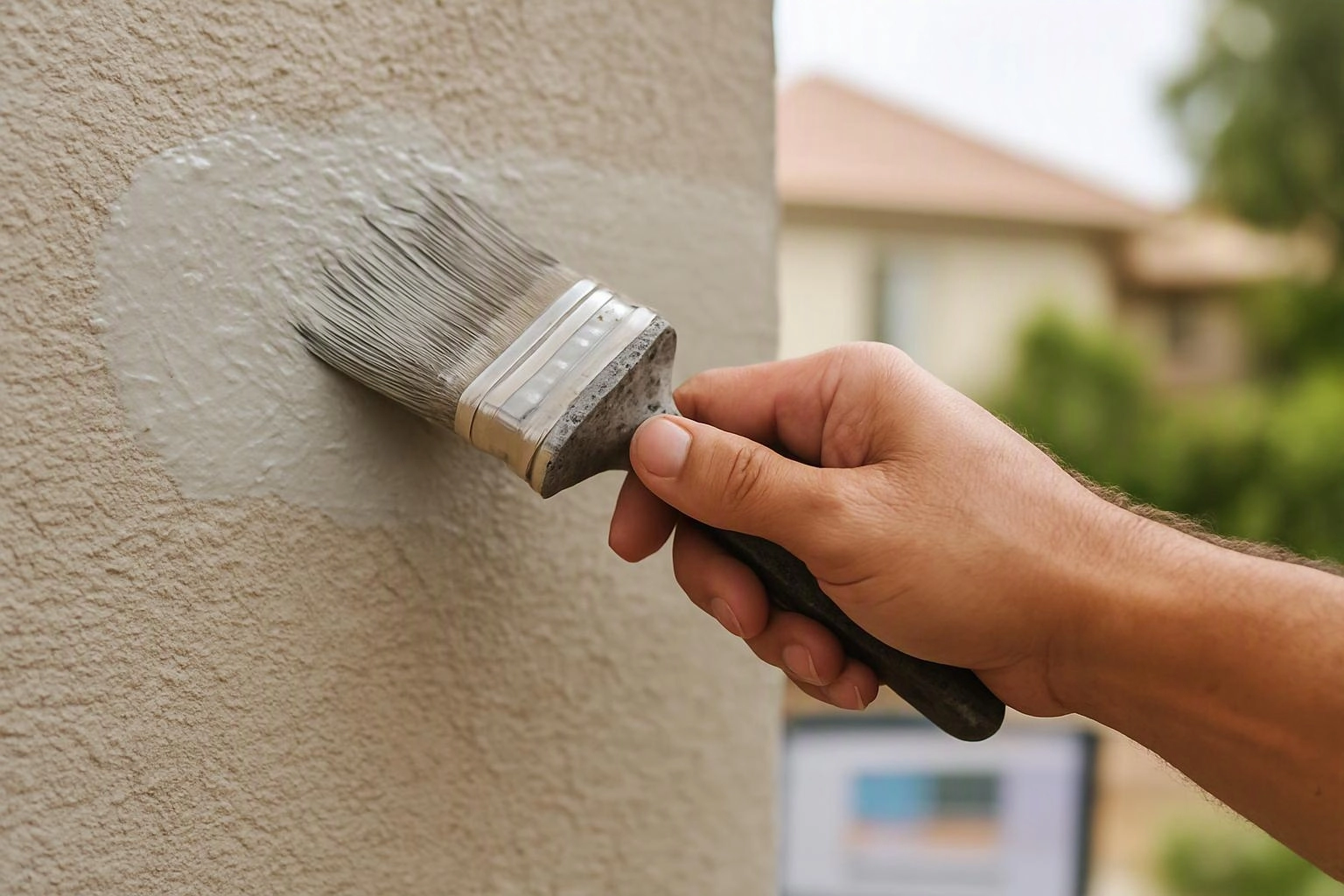
When we assess an exterior, we check the surface for chalking, peeling, cracks, moisture, and movement. We repair unstable areas and confirm that the substrate is suitable before applying a flexible coating. We also watch edges, joints, and repaired spots because those areas can affect the finished appearance.
Elastomeric Coating in Practice: A Real-World Example
A stucco home in Redmond may have fine cracks across an otherwise sound wall. After cleaning and repairing the surface, an elastomeric coating can create a flexible finish that follows minor movement and helps limit water entry.
Related Services
Related Terms
Surface Preparation
Surface Preparation is the cleaning, repair, and conditioning done before painting. The process removes dirt, loose…
Paint Adhesion
Paint Adhesion is the bond that holds a coating to a surface after the paint dries…
Chalking
Chalking is the release of fine, powdery material from an exterior paint film as the coating…
Peeling Paint
Peeling paint is a coating that has lost its bond with the surface beneath it and…
PainterRedmondwa.com
Have Questions About Elastomeric Coating?
Contact PainterRedmondwa.com for practical guidance on Elastomeric Coating and related painting contractor work in Redmond.