
What Is Feathering?
Feathering is a drywall finishing method that spreads joint compound outward until the edges become thin and smooth. The gradual edge helps hide seams, patches, and small surface repairs under paint or texture. Feathering gives the repaired area a softer transition into the surrounding wall, so the finished surface looks even.
Quick Facts About Feathering
Category
Drywall finishing method
Used for
Blending repaired areas
Common confusion
Not the same as sanding
Also called
Feather Edge, Feathered edge
Often discussed with
Drywall Texturing
Key Takeaways About Feathering
- The edge becomes thinner as the compound spreads outward.
- A wider transition helps conceal the repair under the final finish.
- Feathering is not the same as sanding the entire wall smooth.
How Feathering Works
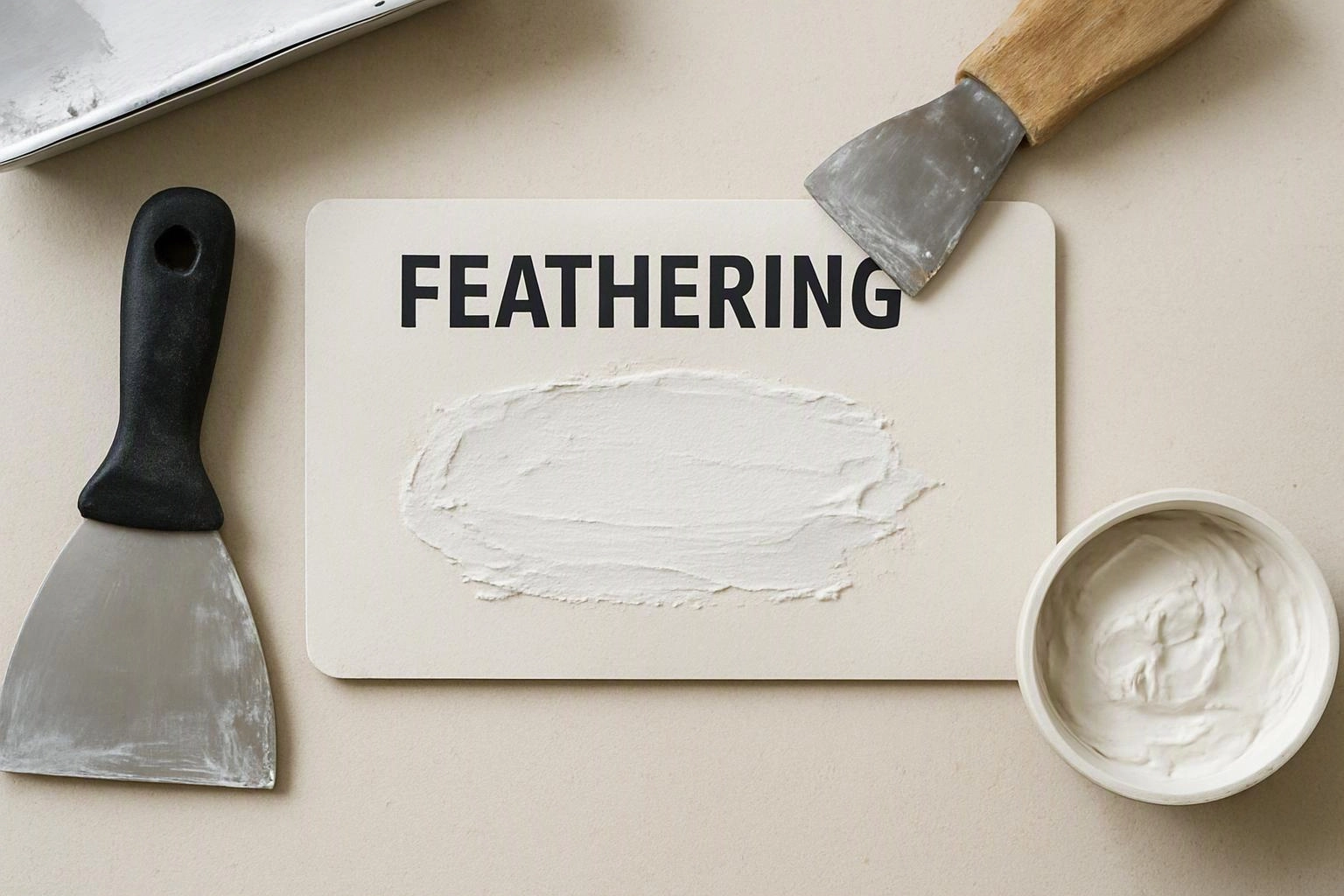
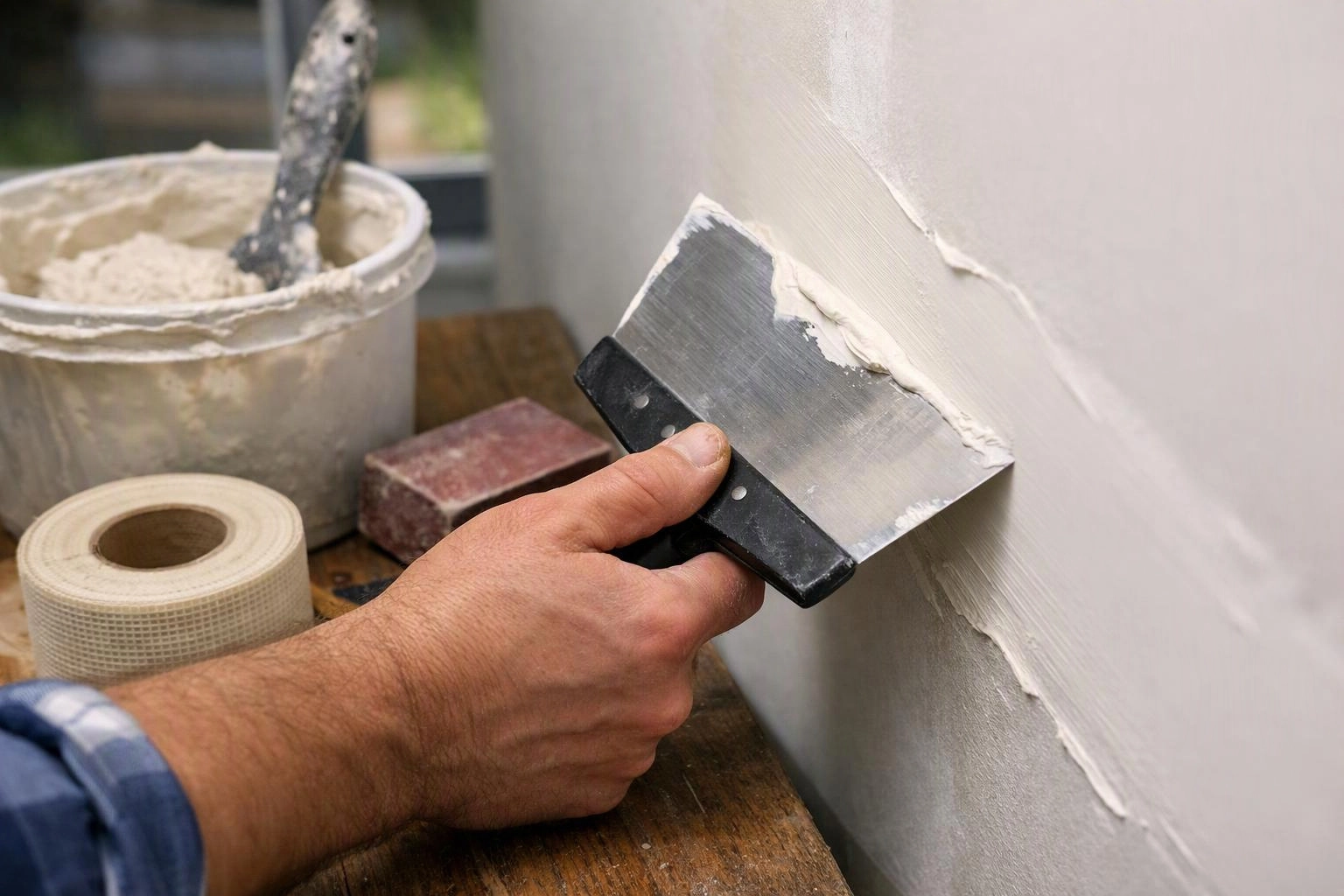
Feathering controls how far joint compound extends beyond a repair. The applicator presses more firmly near the outer edge, leaving less material there. The center keeps enough compound to fill the seam or patch.
Related glossary terms: Drywall Compound, Sanding, Surface Preparation.
Drywall compound is spread in wider passes as the repair develops. After the compound dries, light sanding removes ridges and tool marks. The final texture or paint then covers the transition between the repaired area and the original wall.
Feathering works on patched holes, taped joints, and small damaged sections. The finished blend depends on the repair depth, surrounding texture, and amount of compound applied.
Expert Note
When we prepare a drywall repair, we check the feathered edge from several viewing angles. We also compare the repaired area with the surrounding texture before applying the finish. A smooth edge alone does not ensure a good match if the nearby texture remains uneven.
Feathering in Practice: A Real-World Example
A wall has a filled nail hole near a textured corner. We spread compound beyond the filled spot, thin the outer edge, and match the nearby texture after the repair dries.
Related Services
Related Terms
Drywall Compound
Drywall Compound is a gypsum-based paste used to fill joints, cover fasteners, and smooth damaged drywall…
Sanding
Sanding is surface preparation that uses abrasive material to remove loose paint, smooth rough areas, and…
Surface Preparation
Surface Preparation is the cleaning, repair, and conditioning done before painting. The process removes dirt, loose…
Texture Matching
Texture Matching is the process of recreating an existing wall or ceiling texture on a repaired…
PainterRedmondwa.com
Have Questions About Feathering?
Contact PainterRedmondwa.com for practical guidance on Feathering and related painting contractor work in Redmond.