
What Is Masking?
Masking is the process of covering or sealing surfaces that should stay free of paint. Painters use tape, plastic, paper, or other protective materials around trim, floors, hardware, windows, and fixtures. Proper masking creates a clean boundary and helps prevent splatter, drips, and unwanted paint transfer during interior painting.
Quick Facts About Masking
Category
Painting preparation
Used for
Protecting trim, floors, and fixtures
Common confusion
Often confused with cutting in
Also called
Paint Masking, Protective masking
Often discussed with
Interior Painting
Key Takeaways About Masking
- Masking protects surfaces that are not being painted.
- Tape needs firm contact with the surface edge.
- Masking is not the same as cutting in by hand.
How Masking Works
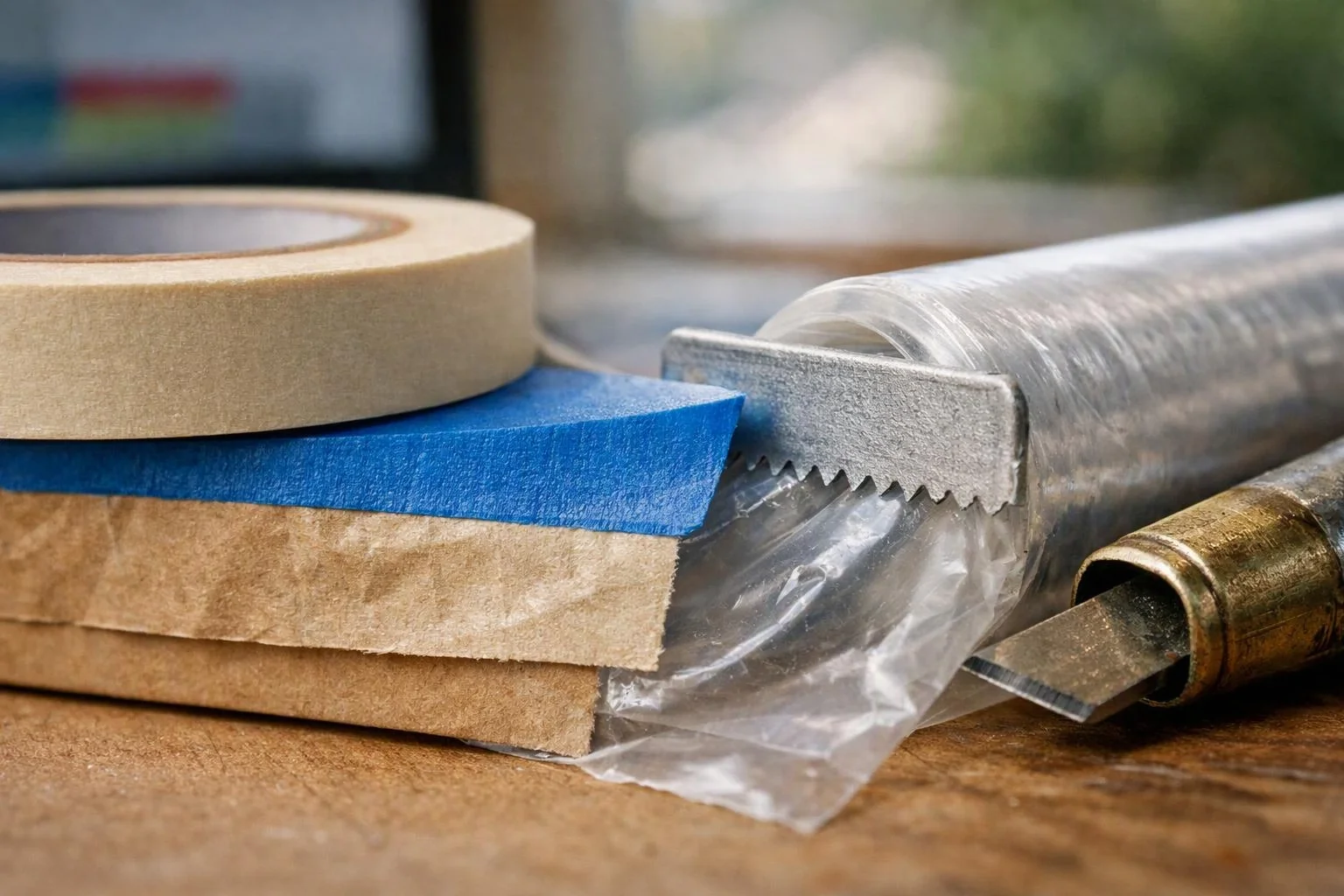
Masking covers surfaces before paint is applied. Painter's tape seals the edge near trim, glass, or hardware. Plastic and paper protect larger areas, such as floors, cabinets, and furniture.
Related glossary terms: Cutting In, Surface Preparation, Overspray.
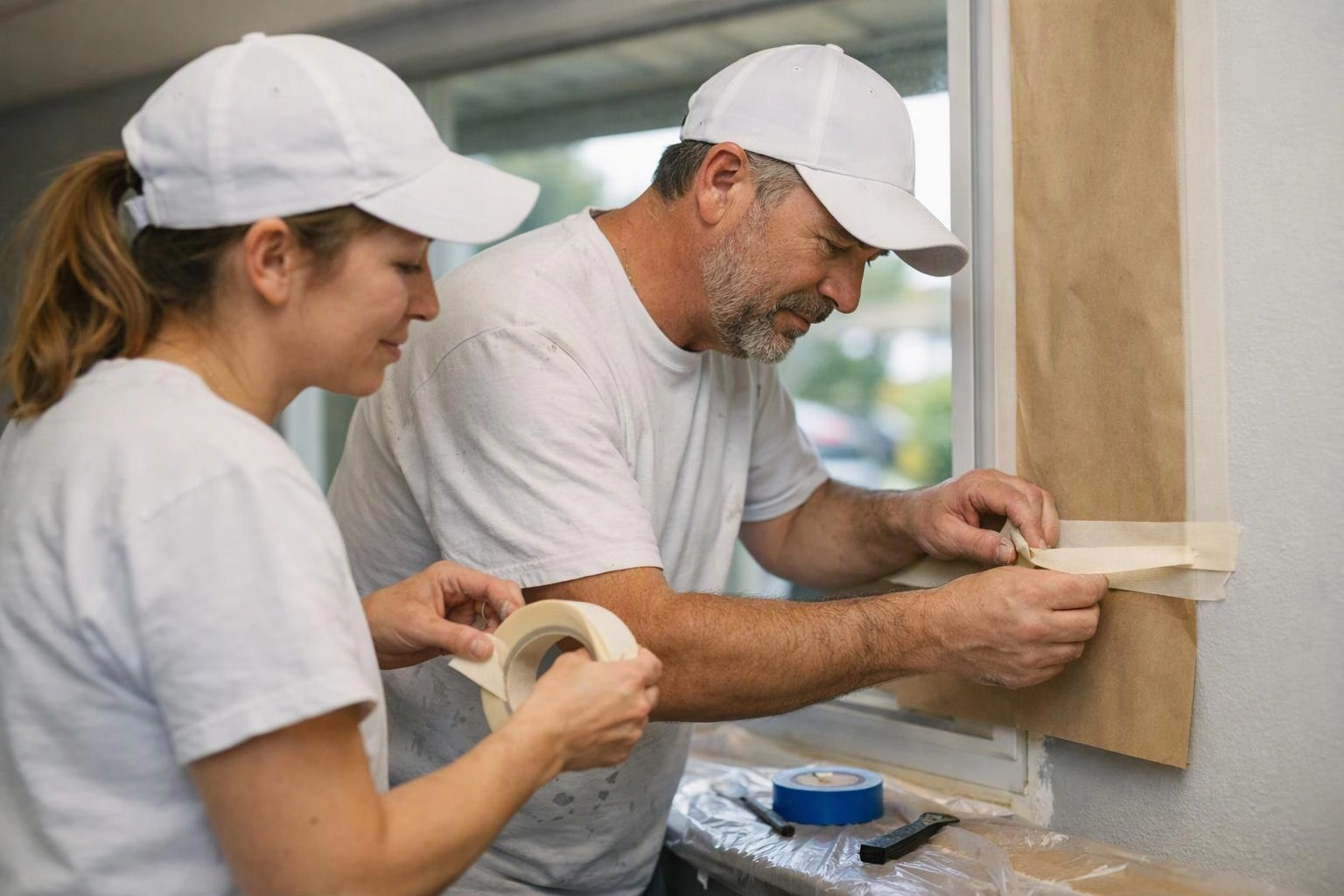
The painter presses the tape edge firmly against the surface. Paint is then applied near the protected area without crossing the barrier. After the paint sets enough to hold its edge, the masking materials are removed carefully.
Masking works with other preparation methods. Cutting In uses a brush to form a clean line without tape. Surface Preparation removes dirt, dust, or loose material before masking begins.
Expert Note
When we mask an interior, we check the surface before applying tape or protective coverings. We press edges firmly, protect nearby items from splatter, and remove masking with care so fresh paint does not peel or tear.
Masking in Practice: A Real-World Example
For an interior wall near painted trim, masking covers the trim and protects the floor below. The painter can then roll the wall while the tape and floor covering help limit stray paint.
Related Services
Related Terms
Cutting In
Cutting in is the controlled process of painting clean edges where a wall meets a ceiling…
Surface Preparation
Surface Preparation is the cleaning, repair, and conditioning done before painting. The process removes dirt, loose…
Overspray
Overspray is paint or coating that travels beyond the intended surface during spraying. Air movement, spray…
Touch-Up Paint
Touch-Up Paint is a small amount of matching paint used to cover minor marks, scratches, scuffs…
PainterRedmondwa.com
Have Questions About Masking?
Contact PainterRedmondwa.com for practical guidance on Masking and related painting contractor work in Redmond.