
What Is Overspray?
Overspray is paint or coating that travels beyond the intended surface during spraying. Air movement, spray pressure, nozzle choice, and nearby surfaces can affect where droplets land. The material may settle as a fine mist on floors, windows, equipment, walls, or finished surfaces that were not meant to receive paint.
Quick Facts About Overspray
Category
Spray application issue
Used for
Describing stray coating beyond the target
Common confusion
Confused with an intentional spray finish
Also called
Spray drift, Paint mist
Often discussed with
Commercial Painting
Key Takeaways About Overspray
- Sprayed paint can drift beyond the intended surface.
- Masking and controlled spray settings help limit unwanted paint.
- Overspray is not the same as an intentional spray finish.
How Overspray Works
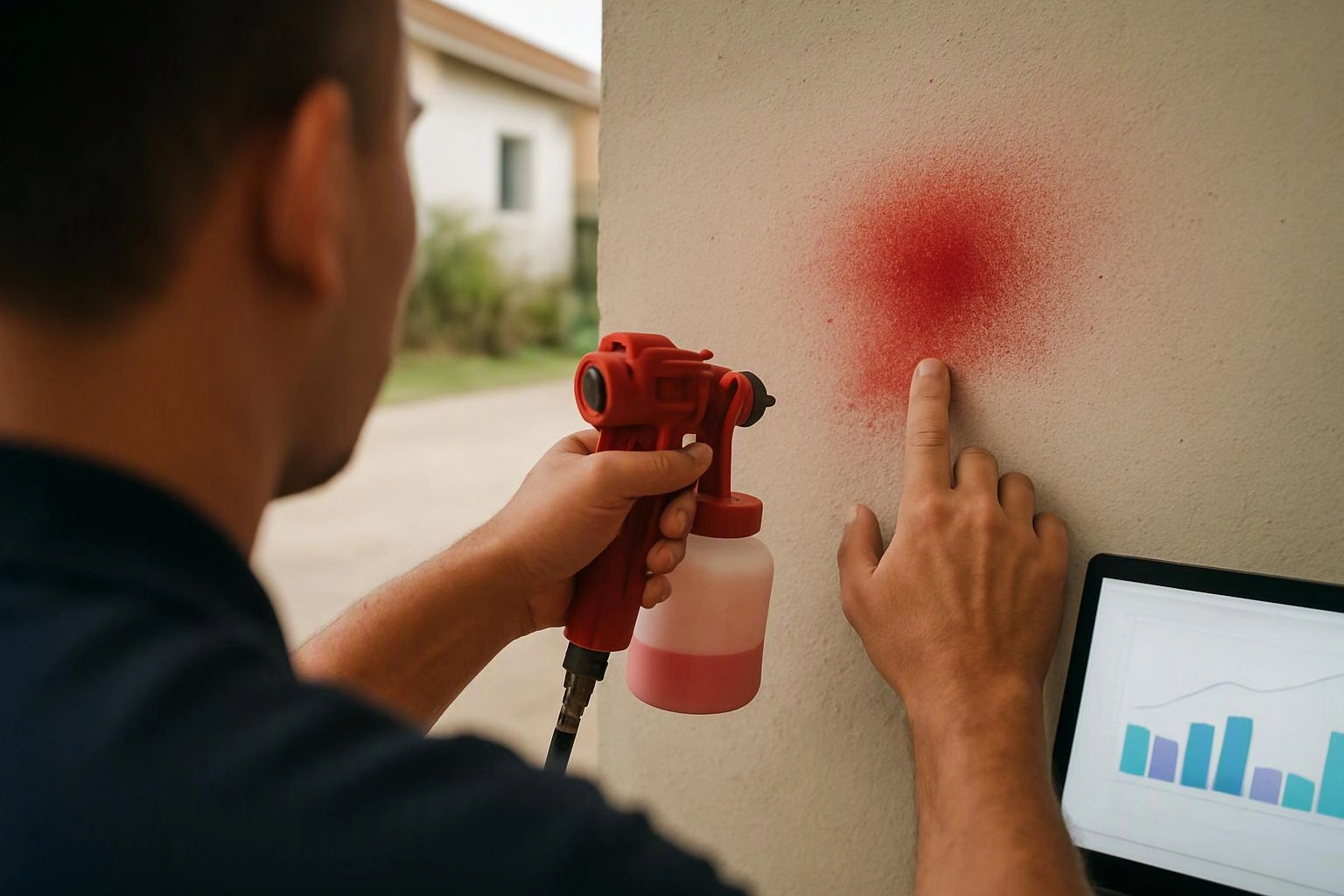
Overspray forms when airborne paint droplets move past the target surface. The droplets may settle on nearby floors, glass, fixtures, equipment, or finished walls. Spray pressure, nozzle selection, coating thickness, and air movement all affect the spray pattern.
Related glossary terms: HVLP Sprayer, Masking, Surface Preparation.
Professional painters control the pattern by adjusting the sprayer and keeping the gun at a steady distance. Masking covers surfaces that should stay clean. Drop cloths protect floors, while careful staging limits exposure around active work areas.
Overspray can leave a dusty film or small specks after the coating dries. A commercial painting crew checks nearby surfaces during preparation and after spraying. Removal methods depend on the surface and the type of coating.
Expert Note
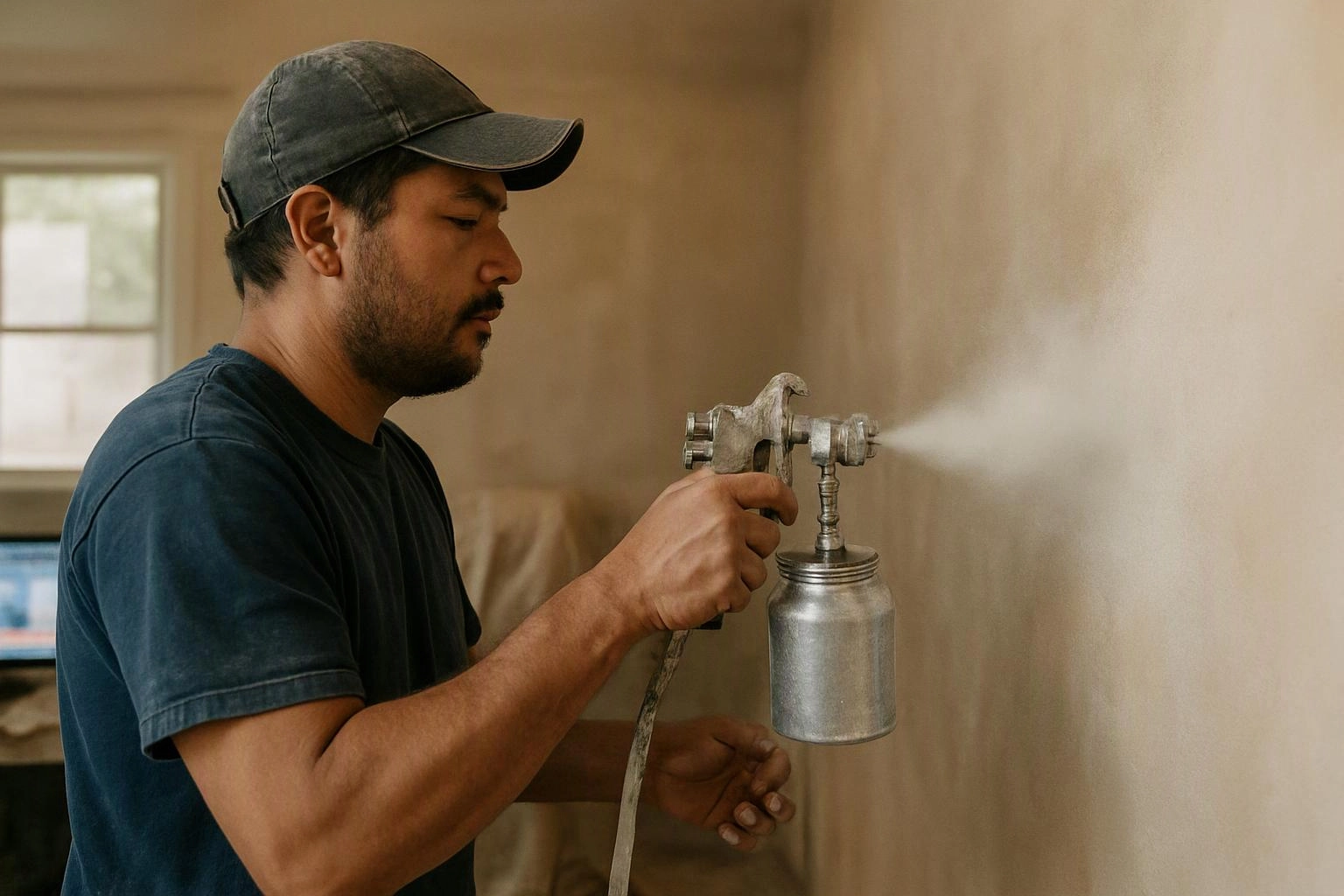
When we spray commercial spaces, we inspect nearby surfaces before work begins. We adjust the spray pattern, protect fixed equipment, and check exposed areas after application. Our team also separates fresh coating from accidental deposits so cleanup does not damage the finished surface.
Overspray in Practice: A Real-World Example
A commercial office renovation may involve spraying doors while glass partitions and hardware remain nearby. Masking those surfaces and controlling the spray pattern helps prevent stray paint from settling on them.
Related Services
Related Terms
HVLP Sprayer
An HVLP Sprayer is a paint sprayer that uses high air volume and low fluid pressure…
Masking
Masking is the process of covering or sealing surfaces that should stay free of paint. Painters…
Surface Preparation
Surface Preparation is the cleaning, repair, and conditioning done before painting. The process removes dirt, loose…
Paint Adhesion
Paint Adhesion is the bond that holds a coating to a surface after the paint dries…
PainterRedmondwa.com
Have Questions About Overspray?
Contact PainterRedmondwa.com for practical guidance on Overspray and related painting contractor work in Redmond.