
What Are Lap Marks?
Lap marks are visible overlaps or darker bands that form when wet paint meets paint that has started to dry. The marks often appear when a painter works across a large exterior wall, pauses, and resumes later. Uneven spreading, hot surfaces, wind, or slow application can make the overlap easier to see.
Quick Facts About Lap Marks
Category
Exterior paint application defect
Used for
Describing uneven paint overlaps
Common confusion
Mistaken for surface texture or color variation
Also called
Overlap Marks, Paint lap marks
Often discussed with
Exterior Painting
Key Takeaways About Lap Marks
- Lap marks follow the edges of overlapping paint sections.
- Wet edges help keep exterior color even.
- Lap marks are not the same as brush or roller texture.
How Lap Marks Works
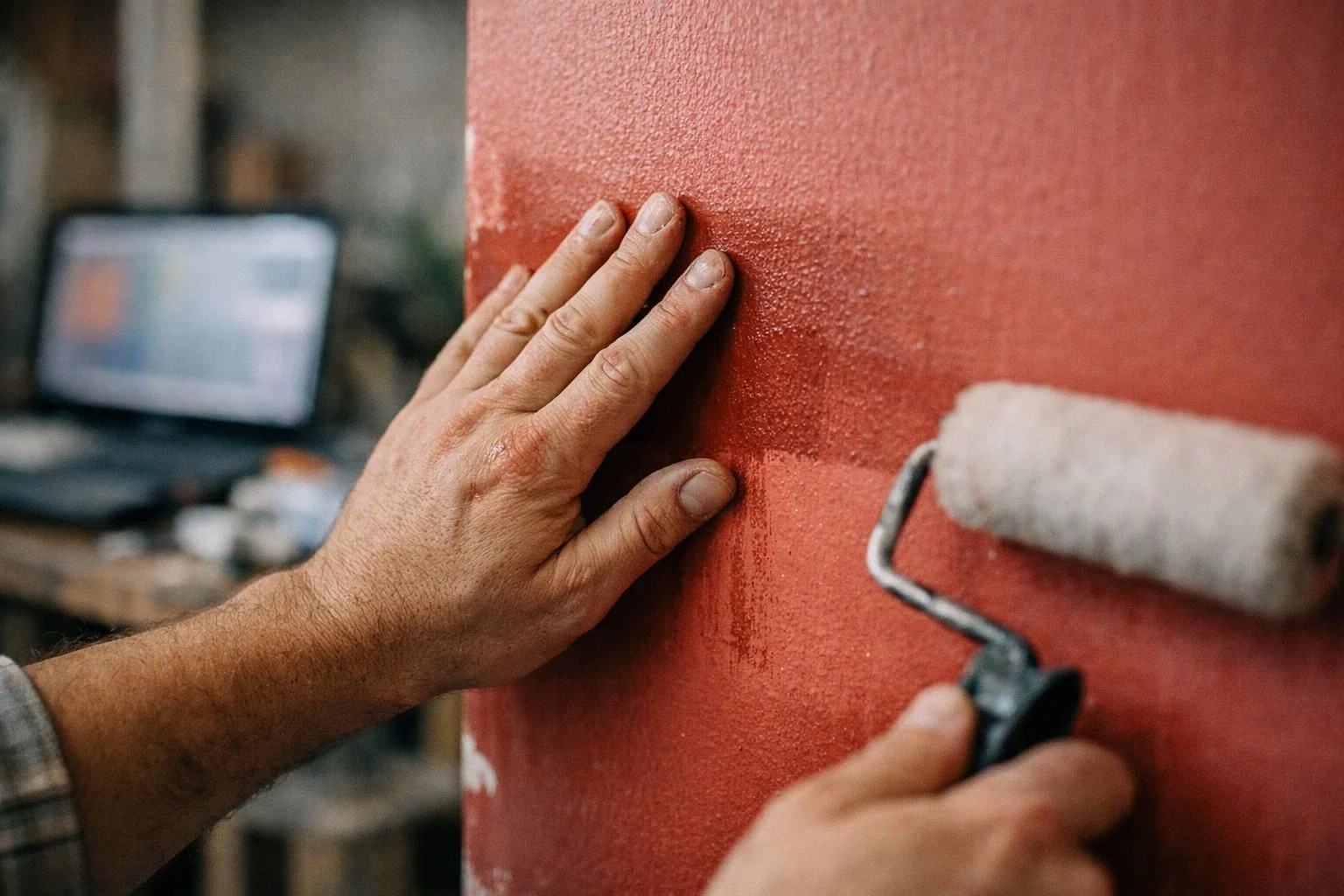
Lap marks form at the edge of a paint section when the next section overlaps after the earlier section has begun to set. The fresh paint cannot blend evenly with the partly dry coating. Light may then reveal a darker band, a change in sheen, or a visible edge.
Related glossary terms: Back Rolling, Feathering, Paint Sheen.
Exterior painters control this issue by keeping a wet edge. They work across manageable sections and spread paint while the adjoining area remains wet. Sun, wind, porous siding, and thick or thin application can shorten the working time. Back rolling can help press paint into textured siding, while steady brush or roller work helps keep the finish consistent.
How Lap Marks Appear on Exterior Surfaces
Lap marks often follow a wall break, corner, window edge, or stopping point. They may show more clearly after the coating dries and light strikes the wall from the side.
Expert Note
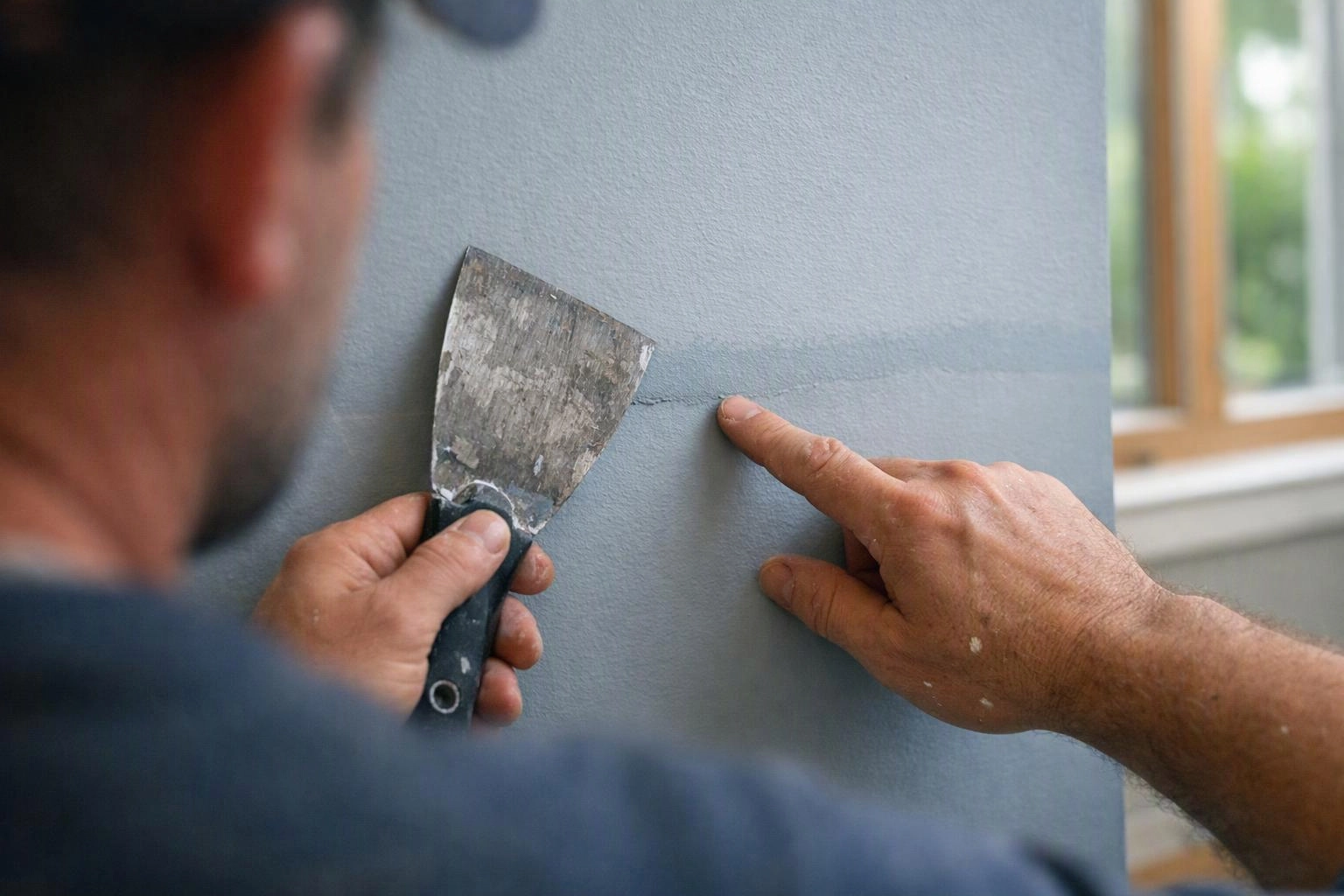
When we prepare an exterior wall, we check how quickly the surface is drying and plan sections around that condition. We keep a wet edge, watch overlap points, and inspect the finish as the coating settles. If a mark appears, we assess whether the cause is application, surface absorption, or changing weather.
Lap Marks in Practice: A Real-World Example
An exterior wall may show a darker band where painting stopped near a window and restarted after the surrounding paint began to dry. A painter can reduce that risk by keeping the working edge wet and blending each new section into the last.
Related Services
Related Terms
Back Rolling
Back Rolling is a painting method that uses a roller to work over freshly sprayed or…
Feathering
Feathering is a drywall finishing method that spreads joint compound outward until the edges become thin…
Paint Sheen
Paint sheen is the level of light reflection a dried coating shows. Sheen ranges from flat…
Surface Preparation
Surface Preparation is the cleaning, repair, and conditioning done before painting. The process removes dirt, loose…
PainterRedmondwa.com
Have Questions About Lap Marks?
Contact PainterRedmondwa.com for practical guidance on Lap Marks and related painting contractor work in Redmond.