Why Interior Paint Peels or Bubbles — and What to Check Before Repainting
Interior paint peeling and bubbling usually come from moisture, weak adhesion, surface contamination, or trapped air. At PainterRedmondwa.com, we check the surface, fix the underlying issue, and prepare the area before repainting.
Get a Free EstimateWhat Do Peeling and Bubbling Paint Look Like?
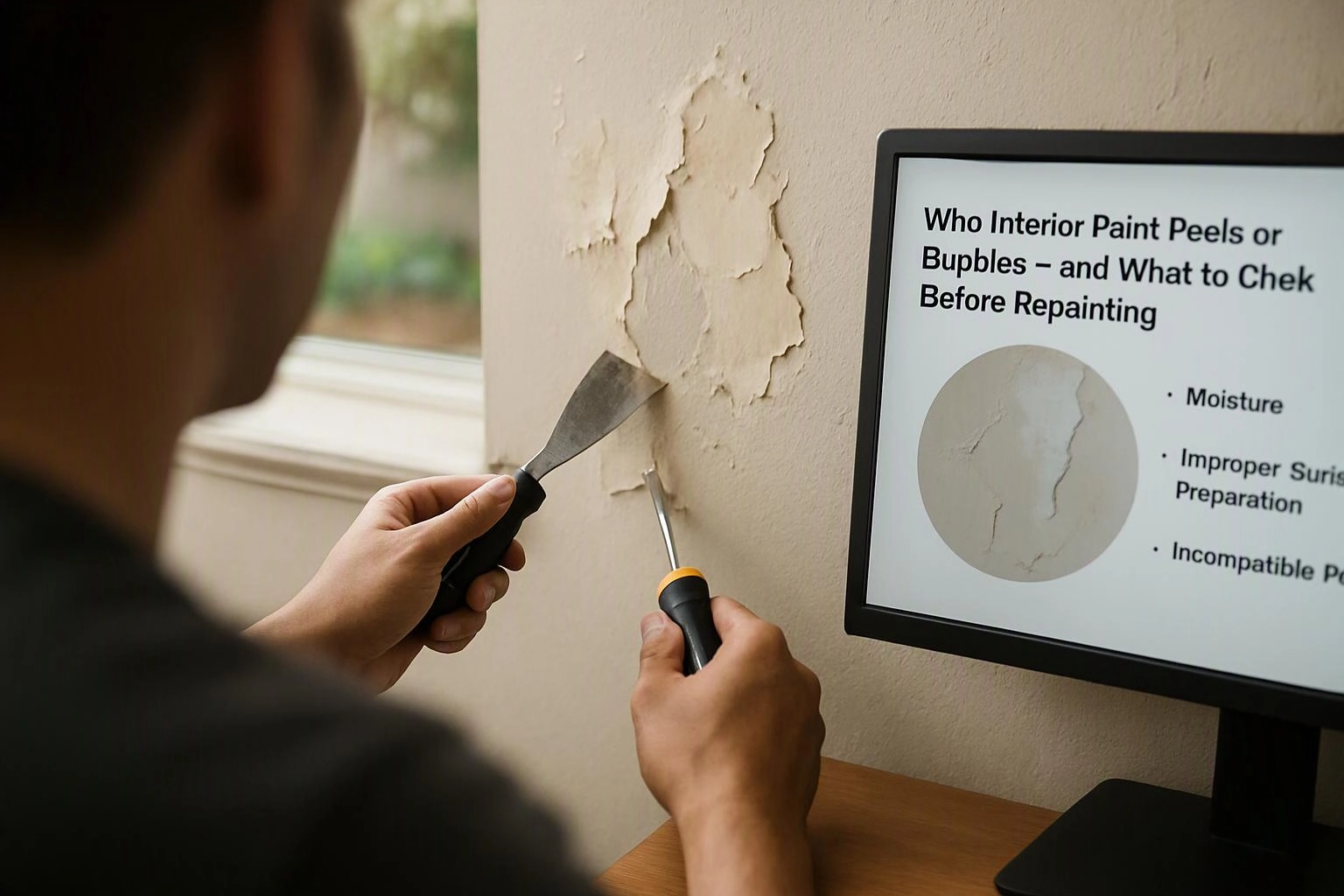
Peeling paint shows that the paint film has lost its bond with the wall, ceiling, drywall, plaster, or wood. The damage can begin in a small spot and spread when moisture or weak adhesion remains.
Walls and ceilings can show different patterns because water and heat move through them differently. We look at the size, location, and spread of the damage before choosing surface repair or repainting.
Why Is Interior Paint Peeling or Bubbling?
Interior paint peels or bubbles when moisture, heat, contamination, or weak adhesion breaks the bond between paint and the surface.
Common causes include problems below the visible coating. The right repair depends on which cause is still active.
Covering the damage without checking the cause often leads to repeat paint failure. We trace the visible problem back to the wall, ceiling, or other substrate.
How Can Moisture Damage Interior Paint?
Moisture can push paint away from drywall, plaster, or wood and leave bubbles, stains, or peeling layers.
Water leaks can affect ceilings and walls near plumbing, windows, roofs, or exterior openings. Bathroom humidity and condensation can also weaken paint when damp air stays against a cool surface.
A ceiling stain may remain after a leak appears to stop. Damp drywall can swell or soften, while mildew can grow in areas that stay wet. We check for these warning signs before applying new interior paint.
What Should You Check Before Repainting?
Before repainting, check the moisture source, substrate, loose coating, surface cleanliness, and primer needs.
These checks help separate a simple coating problem from deeper surface damage. They also guide the preparation needed for reliable recoat adhesion.
Surface preparation should match the condition of the area. We use these checks to plan cleaning, scraping, sanding, patching, priming, and repainting.
Can You Paint Over Peeling or Bubbling Paint?
No, painting over loose or bubbled paint usually leaves the failure in place and causes the new coat to lift.
Paint removal may include scraping away unstable areas and sanding the remaining edges smooth. Patching can restore damaged drywall or plaster before primer seals the repaired surface.
New paint needs a clean, stable base for proper adhesion. We remove weak layers, complete surface repair, and prepare the area before applying the finish coat.
How We Prepare a Surface for Repainting
We inspect the damaged area, remove unstable paint, repair the surface, and choose preparation that supports the new coating.
Our team checks walls and ceilings for loose coating, water stains, surface contamination, and substrate damage. We then use cleaning, scraping, sanding, patching, and primer as the surface requires.
Our Interior Painting service covers the preparation and repainting work, and Free Estimates Available.
How Can You Prevent Paint From Peeling Again?
Paint stays bonded longer when the surface is dry, clean, stable, and matched with compatible coatings. Prevention starts by correcting the condition that caused the paint failure.
Ceiling Painting may need extra care when stains or moisture affected the ceiling surface. We address the condition first so the new coating has a sound base.
When Does Peeling Paint Need More Than Repainting?
Peeling paint needs more than repainting when active moisture, soft drywall, mold, or recurring bubbling affects the substrate.
Active leaks must be corrected before surface repair can hold. Recurring bubbling may point to trapped moisture behind the coating or a deeper coating compatibility problem.
Soft drywall, mold growth, and extensive ceiling damage can weaken the surface beneath the paint. We identify substrate failure and explain the preparation needed before repainting continues.
Related Resources
Interior Paint or Wallpaper: Which Is the Better Fit for Your Walls?
Compared ToPopcorn Ceiling Removal or Skim Coating: Compare the Project Options
Compared ToWallpaper Removal or Painting Over It: Which Service Fits the Job?
Compared ToPainting Contractor or General Contractor: Who Should You Hire?