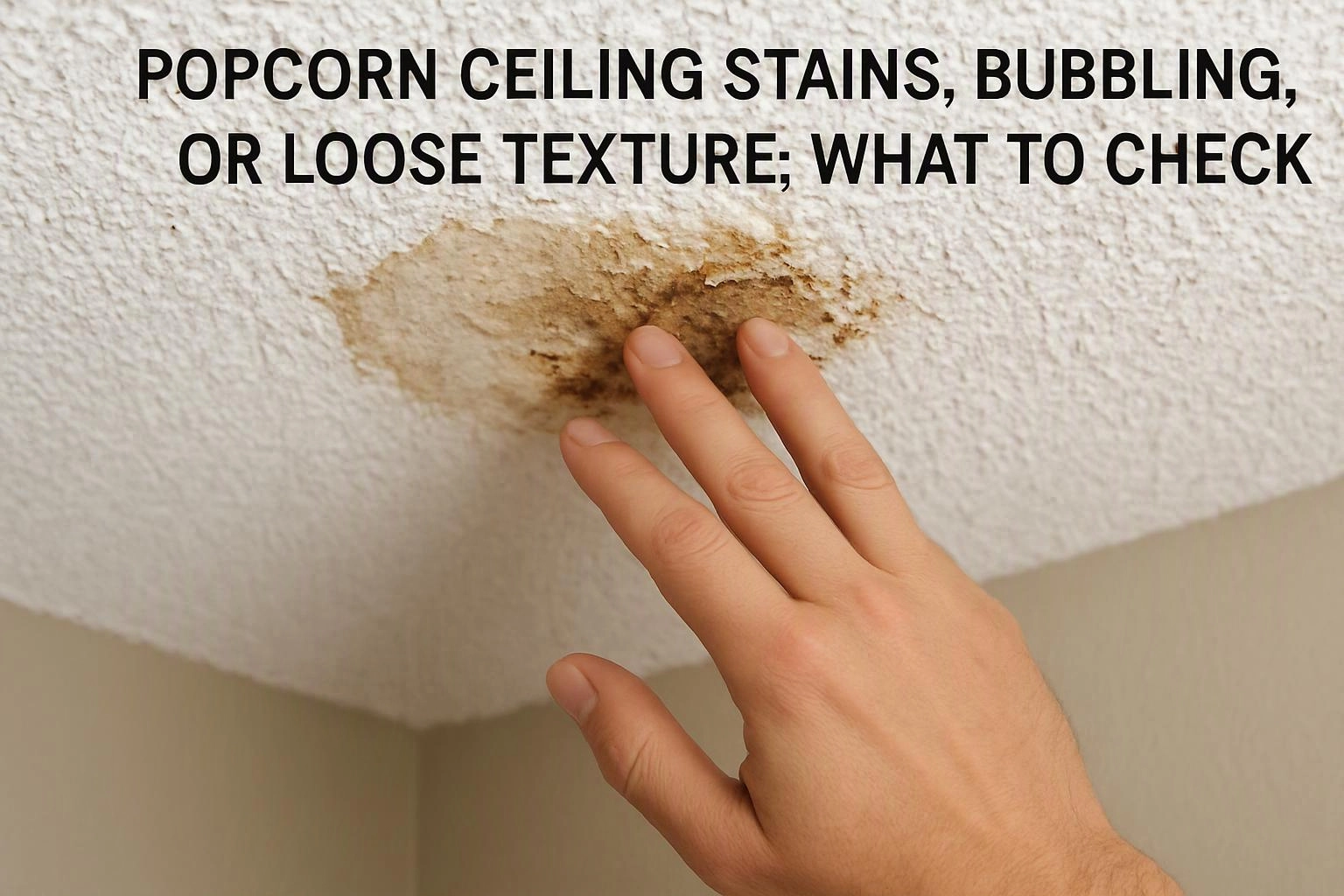
Popcorn Ceiling Stains, Bubbling, or Loose Texture: What to Check
Popcorn ceiling water damage can cause stains, bubbling, soft spots, and loose texture. At PainterRedmondwa.com, we check the ceiling surface and likely moisture source before recommending repair, painting, or removal.
Get a Free EstimateWhat Stains, Bubbling, and Loose Texture Can Mean
Popcorn ceiling stains, bubbling, and loose texture can mean moisture reached the ceiling or the texture has lost its bond.
A ceiling stain may appear as a yellow stain, brown stain, or water mark. Bubbling texture can form when water gets behind the finish. Loose texture may peel, flake, or crumble as texture adhesion weakens.
These signs don't always show where the moisture source began. The source could be above the ceiling, near a vent, or around a ceiling joint. We assess the visible damage and the surrounding surface before planning the work.
Signs of Water Damage on a Popcorn Ceiling
Water damage on a popcorn ceiling often appears as changes in color, texture, firmness, or shape.
Several signs can appear together, especially when a leak continues or the ceiling stays damp.
A small mark can still point to an active moisture problem. We look for changes around the full damaged area, not only the darkest spot.
Common Causes of Popcorn Ceiling Damage
Popcorn ceiling damage commonly comes from a roof leak, plumbing leak, or trapped bathroom moisture.
The cause matters because paint won't solve an active leak or ongoing condensation.
Condensation can leave moisture without a large plumbing or roof failure. We identify the likely moisture source before recommending surface preparation, repair, or removal.
What Soft Spots or Sagging Can Indicate?
Soft spots or a sagging ceiling can indicate moisture has weakened the ceiling material or its support, so the area needs careful assessment before painting.
Wet drywall can lose strength and may not hold ceiling texture or ceiling paint well. A damaged ceiling substrate can also create wider repair needs around the original stain.
Sagging near electrical fixtures deserves extra care. Stop using the affected area if water is near a light fixture, and contact qualified help for electrical concerns. We can assess the paint and ceiling surface, but electrical work must be handled by a licensed electrical professional.
What to Check Before Repairing an Older Popcorn Ceiling
Before repairing an older popcorn ceiling, check its age, surface stability, moisture history, and drywall condition.
Older finishes can include several paint layers or weakened texture. A careful review helps determine whether repair, painting, or removal is suitable.
You shouldn't scrape an uncertain older ceiling without understanding its condition. We can help define the safe repair scope before surface work begins.
How We Assess Stains, Bubbling, and Loose Texture
PainterRedmondwa.com checks the visible damage, the ceiling surface, and the likely moisture source before outlining the work; Free Estimates Available.
We review the stain pattern, bubbling texture, loose texture, and nearby ceiling joints. We also consider whether the drywall feels stable and whether the surface can support a new finish.
Our assessment helps define the repair scope. It may include localized repair, texture removal, ceiling painting, or a broader surface preparation plan.
For broader project details, our Popcorn Ceiling Removal service explains how removal can support a cleaner new finish.
When Ceiling Repair, Painting, or Removal Makes Sense
Ceiling repair makes sense when damage is limited and the ceiling material remains stable after the moisture problem is addressed.
Ceiling painting may work when the surface is sound, prepared properly, and free from active moisture. Stains need suitable preparation so they don't show through the new paint finish.
Popcorn ceiling removal may make sense when the texture is broadly damaged, loose, or difficult to match. Removal also requires careful surface preparation before painting the ceiling.
We choose the work scope based on the substrate, texture adhesion, damage pattern, and desired finish quality. A clean finish depends on preparing the surface, not simply covering the stain.
Ways to Help Prevent New Ceiling Stains and Texture Damage
Preventing new ceiling stains starts with finding moisture early and controlling repeated humidity.
Regular checks can help you notice changes before texture damage spreads.
New discoloration or bubbling deserves attention, even when the area seems small. Early assessment can clarify whether the moisture source is still active.
When to Stop Scraping and Arrange a Ceiling Assessment
Stop scraping loose ceiling texture when the ceiling is wet, soft, sagging, or close to electrical fixtures.
Wet drywall can break apart when disturbed, and sagging may point to weakened support. Dust and falling material can also make ladder work unsafe.
Don't disturb uncertain older texture until its condition has been assessed. If climbing feels unsafe, contact PainterRedmondwa.com so our crew can review the ceiling and outline the next step.
For a quote, share the visible symptoms and the affected ceiling area through our contact page. The quote can reflect the needed repair, preparation, painting, or removal scope.
Questions About Popcorn Ceiling Damage
Can you paint over a stained popcorn ceiling?
Yes, we can paint over a stained popcorn ceiling when the surface is dry, stable, and properly prepared. We first check the moisture source and the condition of the texture. Active leaks, soft drywall, and loose material need attention before painting.
Should loose popcorn ceiling texture be removed before painting?
Yes, loose popcorn ceiling texture should be addressed before painting. New paint won't create a stable bond over peeling or crumbling material. We assess whether localized repair or broader popcorn ceiling removal fits the surface.
Can a popcorn ceiling stain come back after painting?
Yes, a popcorn ceiling stain can return after painting if moisture remains or reaches the ceiling again. We check the likely moisture source and prepare the surface before applying a new finish.
Is bubbling popcorn ceiling texture safe to leave alone?
No, bubbling popcorn ceiling texture shouldn't be ignored when it may involve moisture or a soft surface. The area needs assessment before scraping, repair, or painting. Keep away from sagging areas and electrical fixtures until the condition is checked.