When Cracking or Peeling Popcorn Ceiling Texture Needs Attention
Cracks, peeling, stains, sagging, and loose texture can signal popcorn ceiling damage or a moisture problem. PainterRedmondwa.com checks the surface, identifies the cause, and explains whether repair or removal is the safer choice.
Get a Free EstimateWhat Signs Show That a Popcorn Ceiling Needs Attention?
A popcorn ceiling needs attention when its texture cracks, peels, flakes, stains, sags, or separates from the ceiling surface.
Visible changes can point to surface failure or a hidden moisture problem. We look at the damage pattern before we recommend ceiling repair or texture removal.
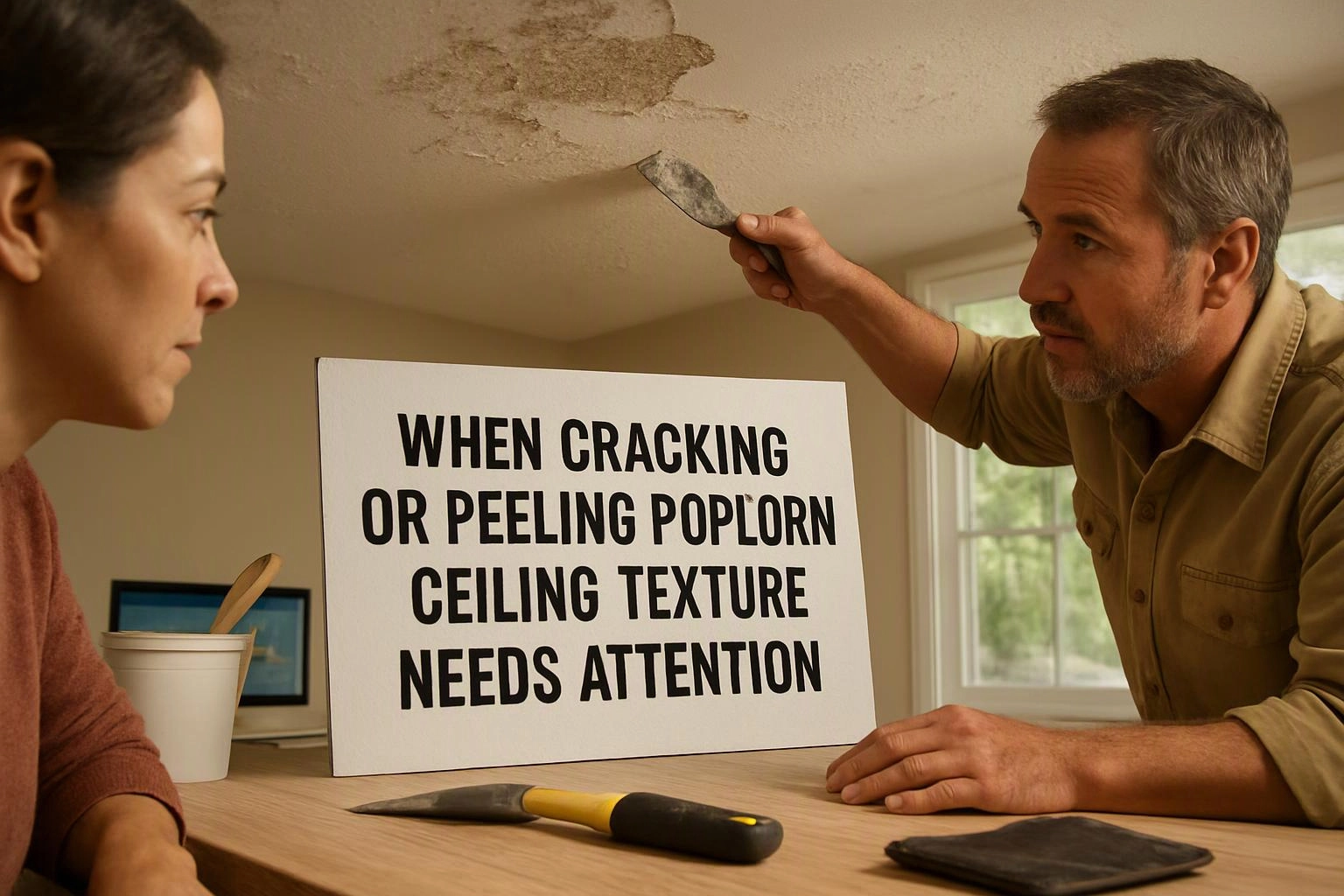
A cracked popcorn ceiling isn't always an emergency, but spreading damage deserves quick attention. Avoid disturbing loose material until its condition and possible moisture source are checked.
Why Is Popcorn Ceiling Texture Cracking or Peeling?
Popcorn ceiling texture cracks or peels when moisture, weak adhesion, surface movement, or aging breaks the bond with the ceiling.
Water leaks can weaken the texture layer and the paint layer below it. Even after a leak stops, leftover moisture can continue damaging the ceiling surface.
Poor adhesion may come from weak preparation, earlier patching, or age-related deterioration. Temperature changes can also make the ceiling expand and contract.
Structural movement may create ceiling cracks at joints or across the ceiling substrate. Our team checks whether the damage is limited to the texture or reaches deeper layers.
Can a Ceiling Stain or Sag Point to Water Damage?
Yes, a ceiling stain or sag can point to water damage, so the moisture source needs attention before surface work.
A water stain can come from a plumbing leak, roof leak, or another form of water intrusion. The stain may remain after the source is fixed, but new discoloration suggests continuing moisture.
A sagging ceiling can signal weakened materials and needs prompt review. We don't cover damaged texture until the area is stable and the moisture source has been addressed.
Moisture can also support mold growth in hidden areas. If the ceiling feels soft, looks swollen, or continues changing, keep people clear and arrange an inspection.
Should Damaged Popcorn Ceiling Texture Be Repaired or Removed?
Repair suits limited, stable damage, while removal may suit widespread peeling, poor adhesion, repeated damage, or an unwanted texture.
Popcorn ceiling repair can work when the damaged area is isolated and the surrounding texture remains firmly attached. We prepare the surface, patch the affected area, and work toward a close texture match.
Popcorn ceiling removal may be the better choice when texture has widespread damage or keeps separating. Removal can also support a smooth ceiling finish when the existing texture no longer suits the room.
Both choices require careful surface preparation. Older texture may contain asbestos-containing material, so material testing should come before disturbing it.
Our Popcorn Ceiling Removal service addresses texture removal, preparation, cleanup, and finishing based on the ceiling's condition.
What Should You Check Before Removing an Older Popcorn Ceiling?
Before removing an older popcorn ceiling, check the material, ceiling condition, moisture history, fixtures, and safe work requirements.
We review these conditions before setting the removal scope. Material testing is especially important when the ceiling's age or layers are unclear.
What Can You Do Yourself, and When Should We Handle the Work?
You can document visible damage and keep the area clear, while we handle material checks, preparation, repair, and removal.
Do not scrape, sand, or disturb loose texture when material testing may be needed. If ladder work feels unsafe, contact us so our crew can assess the ceiling safely.
| Factor | What you can do yourself | What we do |
|---|---|---|
| DIY inspection | Photograph cracks, stains, peeling, and changes. | We assess the pattern, surface, and likely cause. |
| Surface protection | Keep furniture and people away from loose material. | We plan protection and dust control for the work area. |
| Ladder safety | Stay on the floor if access feels unstable. | We assess elevated areas as part of the work. |
| Material testing | Arrange testing before disturbing older texture. | We account for test results in the planned scope. |
| Ceiling repair | Avoid covering active moisture or loose areas. | We prepare, patch, match texture, and finish the surface. |
| Texture removal | Don't scrape or sand untested material. | We plan containment, removal, cleanup, and surface preparation. |
Safe inspection can help you record the problem without making it worse. Texture scraping and dust control need careful planning, especially when older materials may be involved.
How We Assess Cracking and Peeling Ceiling Texture
We assess the texture, ceiling surface, moisture clues, and damage pattern before recommending repair or removal.
Our team starts with a visual inspection of cracks, peeling, stains, and loose areas. We look for changes in texture adhesion and signs that damage extends into the ceiling substrate.
We also review moisture clues and the history of leaks or repairs. That helps separate a surface problem from ongoing moisture damage.
Next, we define the repair scope or removal scope. The plan includes surface preparation, protection, cleanup, and the finish needed for the room.
What Does a Popcorn Ceiling Removal Quote Include?
A popcorn ceiling removal quote should explain the affected areas, protection, removal, surface preparation, cleanup, and finishing work. PainterRedmondwa.com provides free estimates for the planned scope.
Our quote considers the condition of the texture and the ceiling below it. It also explains whether the work includes patching, painting, or a smooth ceiling finish.
We identify containment needs before removal begins. This helps clarify how nearby surfaces, fixtures, and household items will be protected.
To request an estimate, contact our team with the room details and visible damage. Photos can help us understand the starting condition.
What Changes the Cost of Repairing or Removing Popcorn Texture?
The cost changes with the damaged area, texture condition, ceiling access, moisture repairs, surface preparation, and desired finish.
A small area with firm surrounding texture may need less preparation than widespread peeling. Poor texture adhesion can increase the work needed to reach a stable surface.
Water damage may require correction before repair or removal can proceed. Ceiling height and fixture protection can also affect access and containment needs.
The finish level matters as well. A smooth ceiling finish usually calls for more surface preparation than a simple patch repair, so our quote reflects the selected scope.
Questions About Damaged Popcorn Ceiling Texture
Can I paint over peeling popcorn ceiling texture?
No, paint won't fix peeling popcorn ceiling texture or the cause beneath it. Loose material needs evaluation, and moisture damage must be addressed before new paint is applied.
Does a small popcorn ceiling crack need repair?
Yes, a small popcorn ceiling crack should be checked when it changes, spreads, or appears with stains or peeling. Stable, isolated damage may suit a patch repair after the cause is understood.
How can I tell if popcorn ceiling damage is spreading?
Popcorn ceiling damage may be spreading when new cracks, loose pieces, peeling edges, stains, or soft areas appear. Take clear photos over time and contact us if the pattern changes.
What happens if water-damaged popcorn ceiling texture is left untreated?
Untreated water-damaged popcorn ceiling texture can keep peeling, stain further, sag, or support mold growth. The moisture source needs attention before the ceiling surface is repaired.
Is popcorn ceiling removal safe without material testing?
No, popcorn ceiling removal shouldn't begin without material testing when the ceiling may contain asbestos-containing material. Testing helps determine the safe handling and removal requirements.
Related Resources
Popcorn Ceiling Removal or Skim Coating: Compare the Project Options
Compared ToCommercial Roof Coating or Replacement: How to Compare the Options
Compared ToPainting Contractor or General Contractor: Who Should You Hire?
Compared ToRepair vs Full Replacement for Painting Contractor: Cost, Lifespan & Best Fit