Commercial Cool-Roof Coatings: Benefits and Selection Considerations
Commercial cool-roof coatings reflect more solar energy than conventional roof surfaces, which can help limit roof heat and cooling demand. PainterRedmondwa.com helps evaluate roof condition, coating compatibility, drainage, and application needs before recommending a system.
Get a Free EstimateWhat Are Commercial Cool-Roof Coatings?
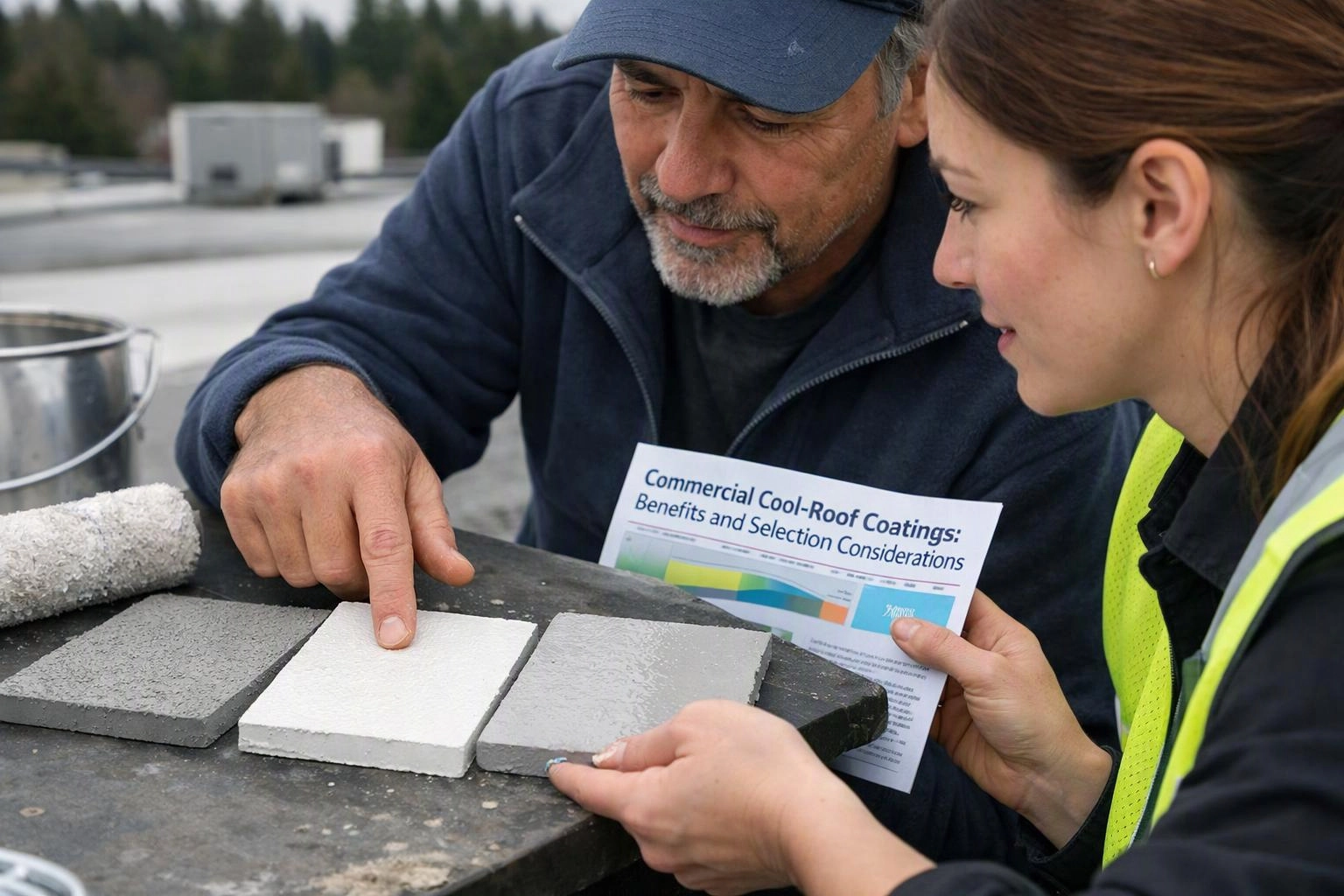
Commercial cool-roof coatings are reflective roof finishes that reduce solar heat absorption at the roof surface.
A commercial roof coating forms a surface layer over a compatible roof membrane. Solar reflectance describes how much sunlight the surface sends away, while thermal emittance describes how well it releases absorbed heat.
A cool roof can help control roof heat, but the coating must match the roof substrate and its condition. Roof drainage, seams, penetrations, and existing repairs also affect the result.
What Benefits Can a Commercial Cool-Roof Coating Provide?
Commercial cool-roof coatings can limit roof heat, support cooling efficiency, protect compatible roof surfaces, and extend maintenance planning.
Each benefit depends on roof condition, coating selection, and proper application. The table connects the main benefit with its physical or maintenance effect.
| Potential benefit | How it may help |
|---|---|
| Higher solar reflectance | Reflects more solar energy and can reduce heat absorbed by the roof surface. |
| Lower roof surface heat | May reduce heat transfer through compatible roof assemblies. |
| Support for cooling efficiency | Can ease air-conditioning load when the building, insulation, and climate support that result. |
| Roof surface protection | Can shield compatible roof materials from weather exposure and support roof maintenance. |
| Planning support | Creates a clearer maintenance plan when the roof is suitable for restoration. |
Building comfort may improve when less heat moves through the roof assembly. A coating can't correct poor insulation, blocked drains, or major membrane failure.
How Can a Cool-Roof Coating Affect Roof Temperature and Cooling Demand?
A cool-roof coating reflects more solar energy, so the roof can absorb less heat and transfer less heat into the building.
Solar radiation warms an exposed roof surface. A reflective finish can reduce that heat gain, while thermal emittance helps the surface release heat.
The effect on air-conditioning load depends on building insulation, roof design, climate, equipment, and interior use. We treat a cool-roof coating as one part of the building envelope, not as a stand-alone energy guarantee.
Which Commercial Roof Coating Factors Should You Compare?
The right coating depends on the existing roof material, moisture exposure, movement, drainage, weather, and required performance.
We compare the coating chemistry with the roof substrate and the building's exposure. No single system suits every commercial roof.
| Coating type | Key comparison points |
|---|---|
| Acrylic roof coating | Consider roof movement, weather exposure, and moisture conditions before selection. |
| Silicone roof coating | Review its compatibility with the roof surface and its ability to handle moisture exposure. |
| Polyurethane roof coating | Compare expected wear, movement, impact exposure, and the existing roof assembly. |
| Elastomeric coating | Assess flexibility, surface condition, weather exposure, and required coating adhesion. |
| Roof and site conditions | Check the roof substrate, ponding water, drainage, seams, flashing, and roof penetrations. |
Coating adhesion depends on a clean, sound, and compatible surface. We don't select a system from the product label alone.
How Do We Check a Roof Before Applying the Coating?
We check roof condition, moisture risks, drainage, repairs, and coating compatibility before planning application.
Our roof inspection helps show whether restoration makes sense. We also look for warning signs that require repair before coating work.
Persistent ponding water can undermine a coating system and signal a drainage problem. We address that condition in the project plan before recommending application.
What Does Commercial Cool-Roof Coating Application Include?
Commercial Cool-Roof Coating Application includes surface cleaning, repair preparation, compatible primers when needed, coating application, and detail work.
We prepare the roof so the coating can bond with the existing surface. Surface cleaning removes dirt and residue, while repairs address cracks, seams, flashing, and other weak areas.
Our crew applies the selected coating with attention to coverage consistency. We also review roof details, drains, penetrations, and edges so the finished system works as a complete roof surface.
Commercial Painting skills support careful surface preparation and finish control, but roof coating still requires roof-specific inspection and planning. See our Commercial Cool-Roof Coating Application service for the application process.
What Can Change the Cost of a Commercial Cool-Roof Coating Project?
Commercial cool-roof coating cost depends on roof condition, preparation, coating selection, access, repairs, and detail work.
Roof size affects material needs, while roof condition affects cleaning and repair work. Access, drainage details, roof penetrations, and application complexity can also change the work involved.
We include the roof inspection findings, preparation needs, repair scope, coating system, and detail work in our estimate. Free Estimates Available.
Request an exact quote after we review the commercial roof. The quote should reflect the actual roof assembly and the preparation required for coating adhesion.
How Should You Decide if Cool-Roof Coating Fits Your Building?
A cool-roof coating fits best when the existing roof is suitable for restoration and the building benefits from lower roof heat.
Use these questions to frame the decision before requesting an assessment:
Energy priorities matter, but they should be weighed with roof condition and future replacement plans. We use the inspection findings to connect those factors to a practical coating decision.
When Should You Request a Commercial Roof Coating Assessment?
Request an assessment when roof wear, leaks, heat concerns, or planned restoration make coating suitability uncertain.
Warning signs include surface wear, failing seams, recurring leaks, and ponding water. A roof inspection can show whether the problem calls for preparation, repair, restoration, or a different roof plan.
We can review the roof before you commit to a coating system. Contact our team for an assessment and an exact project quote.
Questions About Commercial Cool-Roof Coatings
Can a cool-roof coating be applied over an existing commercial roof?
Yes, a cool-roof coating can be applied over an existing commercial roof when the roof is sound, clean, dry, and compatible with the coating system. We check the membrane, repairs, moisture conditions, drainage, and adhesion before recommending application.
Does a cool-roof coating fix roof leaks?
No, a cool-roof coating doesn't automatically fix roof leaks. We locate and address compatible repairs, seams, flashing, and other defects before coating the roof.
What happens if a commercial roof has ponding water?
Ponding water can weaken coating performance and may signal a roof drainage problem. We review low areas, drains, membrane condition, and the source of the standing water before planning application.
How do I get an exact quote for commercial cool-roof coating?
Request an exact quote after we inspect the roof and review its condition, access, preparation, repairs, drainage details, and coating system. Our estimate reflects the actual work required for that commercial roof.