Signs a Commercial Roof Coating May Be Failing
Signs a commercial roof coating may be failing include peeling, delamination, blisters, cracks, exposed substrate, fading, and recurring leaks. PainterRedmondwa.com checks the coating, roof surface, drainage, and moisture before recommending repair or recoating.
Get a Free Estimate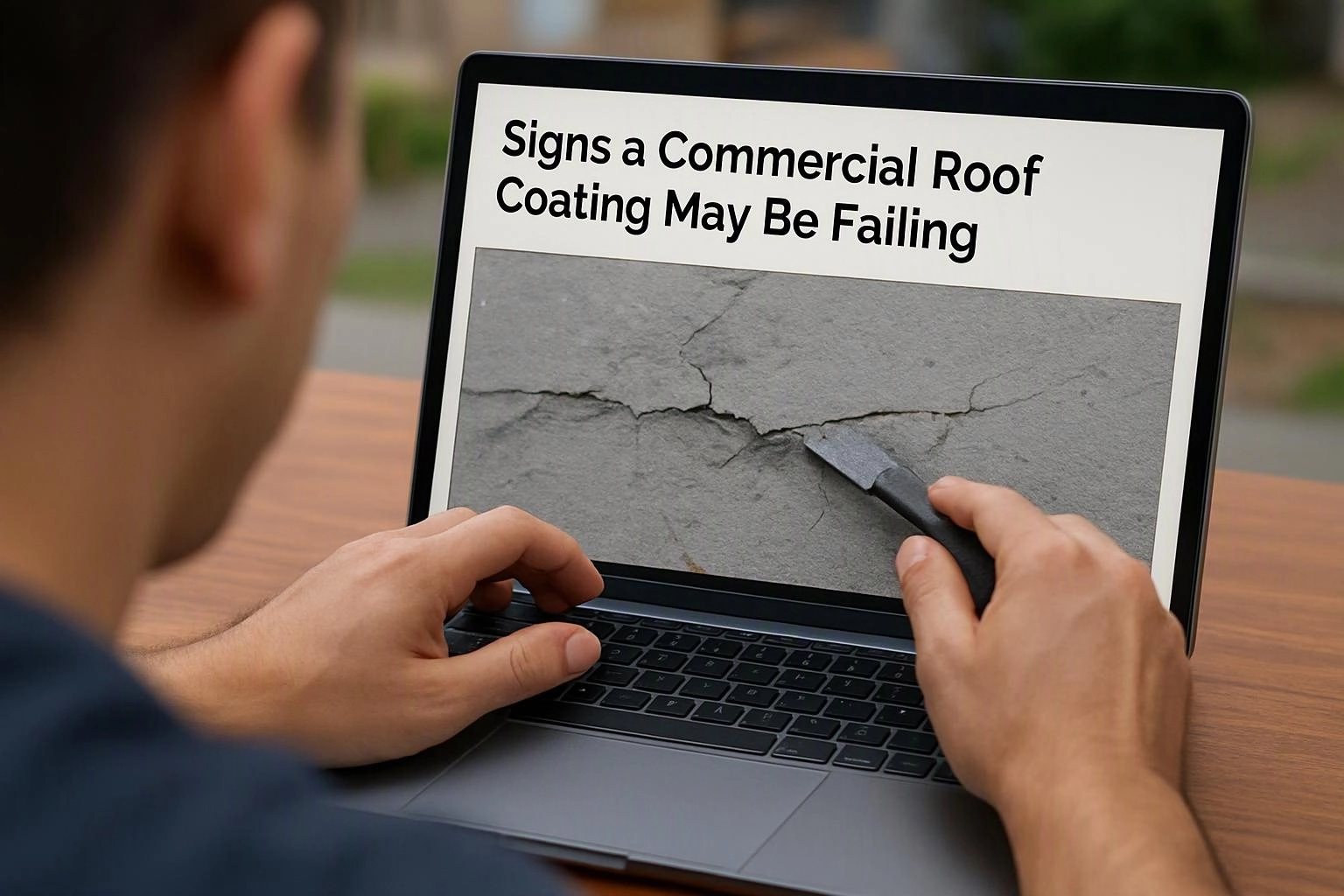
What Are the Warning Signs of a Failing Commercial Roof Coating?
A failing commercial roof coating often shows surface separation, cracks, bubbles, exposed roofing, color change, or moisture problems.
Some signs are easy to see from a safe viewing area. Roof access can be hazardous, so leave close inspection and testing to our crew.
What Do Peeling, Blisters, and Cracks Mean?
Peeling, blisters, and cracks show that the coating has lost adhesion, expanded over trapped moisture, or cannot move with the roof surface.
Peeling often points to poor bonding between the coating and the roof. Delamination can spread when water enters a weak area or when roof movement pulls the coating apart.
Blisters may form when moisture or air sits below the coating. Cracks may develop when the coating becomes brittle, the roof membrane moves, or surface preparation was incomplete.
We assess the coating film, nearby seams, and exposed areas before choosing roof coating repair or recoating.
Why Does Commercial Roof Coating Peel or Delaminate?
Commercial roof coating peels or delaminates when the surface is dirty, damp, incompatible, poorly prepared, or exposed to movement and weather stress.
Dirt, oil, and loose material can block strong adhesion. Moisture below the coating can also push against the coating film as conditions change.
An incompatible coating may fail to bond with the existing roof system. Weather exposure and roof movement can worsen weak areas over time.
Our crew checks the clean roof surface, existing coating, and roof condition before applying a compatible coating. Good surface preparation is essential for a durable commercial roof coating.
Does a Faded Roof Coating Need to Be Recoated?
A faded roof coating doesn't always need recoating because color change alone doesn't prove coating failure; adhesion, coverage, cracking, and moisture also need review.
Ultraviolet exposure can change the appearance of a reflective roof coating. Fading may also signal reduced reflective performance, but appearance doesn't show the full condition.
We review film thickness, adhesion, roof membrane condition, and areas with exposed substrate. We also look for leaks, blisters, and surface separation before recommending recoating.
What Should Be Checked Before More Roof Coating Is Applied?
Before more roof coating is applied, we check the existing coating, roof substrate, moisture, drainage, damage, and coating compatibility.
Additional coating won't correct hidden moisture or a failing roof membrane. Our assessment helps determine whether repairs should come before recoating.
Our Commercial Cool-Roof Coating Application process follows the condition of the roof, not just its appearance.
How We Assess Commercial Roof Coating Failure
We assess commercial roof coating failure through a visual inspection, adhesion review, and close look at the roof surface.
Our team checks coating edges, seams, flashing, drains, and areas with visible moisture damage. We look for patterns that show whether the problem is local or spread across the roof.
We also consider the roof membrane, substrate, drainage, and prior repairs. These details help us decide whether roof coating repair, preparation, or recoating fits the roof's condition.
We explain what we find and what the recommended work includes. You can request a quote through our contact page.
DIY Checks vs Calling PainterRedmondwa.com
You can make safe observations from the ground or another approved access area, but roof coating testing and application require proper access and preparation.
Do not walk on a commercial roof when the surface is wet, damaged, steep, or unsafe. Call our crew when the review requires roof access, adhesion testing, moisture assessment, repairs, or commercial roof coating application.
| Factor | What you can do yourself | What we do |
|---|---|---|
| Visual roof review | Look from a safe location for peeling, fading, cracks, leaks, or ponding water. | Inspect the coating, roof membrane, seams, flashing, drainage, and substrate. |
| Safe access | Avoid unsafe climbing, wet surfaces, damaged areas, and roof edges. | Use suitable access and assess areas that cannot be reviewed safely from the ground. |
| Coating adhesion | Note visible lifting or surface separation without pulling at the coating. | Assess adhesion and determine whether loose coating must be removed. |
| Moisture assessment | Report recurring leaks, stains, damp areas, or bubbles. | Trace moisture concerns and review possible damage below the coating. |
| Surface preparation | Keep records of visible problems and previous roof work. | Plan cleaning, repairs, removal of loose coating, drying, and compatibility checks. |
| Commercial roof coating application | Do not apply coating over peeling, wet, damaged, or unknown surfaces. | Apply the selected roof coating system after the surface and roof condition are ready. |
Questions About Failing Commercial Roof Coatings
Can roof coating failure cause leaks?
Yes, roof coating failure can contribute to leaks when cracks, peeling, or exposed areas let water reach the roof membrane or substrate. We also check seams, flashing, drains, and other possible leak sources.
Can roof coating be applied over peeling coating?
No, new roof coating shouldn't cover loose or peeling material. We remove or prepare failed areas, address moisture and damage, and confirm compatibility before recoating.
Are roof coating blisters always a sign of water damage?
No, roof coating blisters aren't always proof of water damage. Blisters can involve trapped moisture, air, weak adhesion, or surface conditions, so we assess them before selecting repairs.
How can I tell whether a roof coating is failing or only dirty?
A dirty roof coating usually has surface grime without peeling, cracks, blisters, exposed substrate, or recurring leaks. We review adhesion, coverage, moisture, and roof condition when dirt hides the coating surface.
Related Resources
Commercial Painting or Cool-Roof Coating: Which Scope Do You Need?
Compared ToCommercial Roof Coating or Replacement: How to Compare the Options
Compared ToPainting Contractor or General Contractor: Who Should You Hire?
Compared ToRepair vs Full Replacement for Painting Contractor: Cost, Lifespan & Best Fit