When Peeling or Bubbling Wallpaper Needs Attention
Signs wallpaper needs removal include repeated peeling, open seams, bubbling, stains, soft wall areas, and damage that prevents a smooth finish. At PainterRedmondwa.com, we check the wallpaper and wall surface before recommending removal, repair, or installation.
Get a Free EstimateWhat Signs Mean Wallpaper Needs Removal?
Wallpaper usually needs removal when peeling, bubbling, staining, or wall damage keeps returning or affects the surface beneath it. Repeated problems often point to a weak bond or a wall condition that needs attention.
Look for these warning signs before planning paint preparation or new wallpaper installation:
One small defect may be repairable. Widespread separation usually calls for wallpaper removal and a closer wall inspection.
Why Is Wallpaper Peeling at the Seams?
Wallpaper peels at the seams when adhesive loses contact, moisture affects the wall, or the surface wasn't prepared well. Wallpaper seams are common failure points because the paper edges meet and rely on a clean adhesive bond.
Humidity can soften wallpaper adhesive and cause wallpaper separation. Wall movement can also stress the joints, especially where drywall panels meet or cracks develop.
Wallpaper age matters because older paper and adhesive may lose strength over time. We check the seam, the paper backing, and the wall surface before choosing repair or removal.
Can Bubbling Wallpaper Mean Moisture Is Behind It?
Yes, bubbling wallpaper can mean moisture is behind it, but trapped air, weak adhesive, and poor installation can also cause bubbles. A bubble near a stain or soft area deserves closer attention.
Possible moisture sources include plumbing leaks, condensation, and damp drywall. Water stains may spread or change as the wall remains wet.
We look for visible moisture signs before continuing with wallpaper removal. A moisture inspection helps separate a surface problem from water damage behind the paper.
What Should You Check Behind Peeling Wallpaper?
The wall behind peeling wallpaper should be checked for moisture, stains, soft areas, cracks, adhesive buildup, and uneven surfaces. These conditions affect whether the wall can receive paint or new wallpaper.
Drywall may show torn facing, swelling, or soft spots after water damage. Plaster may show cracks, loose areas, or a surface level that needs correction.
We also check for old wallpaper paste and adhesive residue. A clean, sound surface supports better wall repair and stronger wallpaper installation.
Should You Remove Wallpaper Before Fixing Wall Damage?
Yes, wallpaper should usually be removed before fixing damage because repairs need direct access to the wall surface. Covering damaged paper can hide problems and leave an uneven finish.
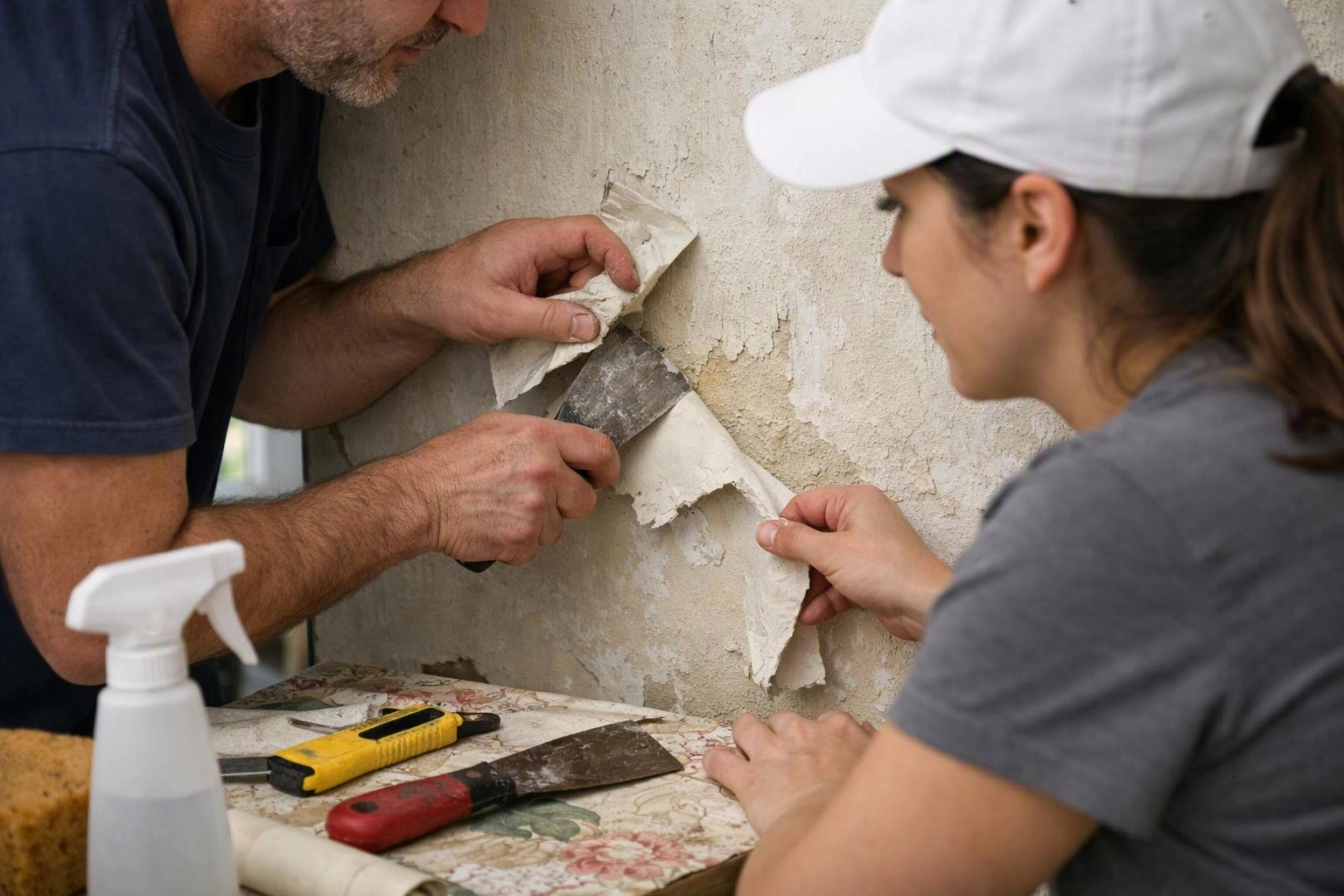
We remove the affected covering, assess the drywall or plaster, and plan the needed wall repair. Surface preparation may include adhesive removal, patching, smoothing, and cleaning.
After the wall is sound and level, it can receive paint preparation or new wallpaper installation. Our Wallpaper Removal service connects removal with the next surface-preparation step.
When Can You Repair Wallpaper Instead of Removing It?
Wallpaper may be repairable when damage is small, localized, and the remaining paper still bonds well to a sound wall. The overall wallpaper condition matters more than one isolated flaw.
Minor seam lifting, small wallpaper tears, and localized bubbles may respond to careful repair. Matching wallpaper also helps make a repaired area less visible.
We check for adhesive failure, loose sections, and hidden wall damage before recommending a repair. Removal is more suitable when defects are widespread or keep returning.
DIY Wallpaper Checks vs Our Removal Work
You can inspect visible wallpaper problems safely, while our crew handles removal, wall checks, surface preparation, and cleanup. A simple inspection can help you describe the problem before requesting an estimate.
Do not disturb areas that look damp, mold-like, or structurally weak. We can assess the wall condition and explain the next step.
| Factor | What you can do yourself | What we do |
|---|---|---|
| Homeowner inspection | Note peeling, stains, bubbles, odors, and soft areas without forcing the paper. | We assess visible defects and the likely condition beneath the covering. |
| Wall protection | Keep furniture and nearby surfaces clear of loose paper and debris. | We protect nearby areas during wallpaper removal and cleanup. |
| Adhesive removal | Avoid aggressive scraping that can damage drywall or plaster. | We remove loose paper and adhesive residue with the wall surface in mind. |
| Wall damage assessment | Record cracks, stains, soft spots, and uneven sections. | We evaluate wall damage and identify surface repairs before finishing. |
| Surface preparation | Keep the area accessible for an inspection and estimate. | We prepare the wall for paint or wallpaper installation. |
What Our Wallpaper Removal Process Checks
Our wallpaper removal process checks the covering and the wall beneath it before the next finish is planned. We connect each step to the wall's condition.
We explain what the wall needs before the finish is selected. That helps prevent new wallpaper from hiding unresolved wall damage.
What Changes the Cost of Removing This Wallpaper?
Wallpaper removal cost changes with the wall area, number of layers, adhesive strength, wall damage, access, and cleanup needs. Each factor affects the work needed to expose and prepare the wall.
Multiple wallpaper layers may require more careful removal. Strong adhesive can also increase adhesive removal work, while damaged drywall or plaster may need added surface repairs.
We review these conditions when preparing an estimate. Request an estimate so we can assess the wallpaper and explain what the quote includes.
Questions About Peeling Wallpaper and Wall Damage
Can you wallpaper over peeling wallpaper?
Wallpaper installation over peeling wallpaper usually creates a weak, uneven finish. We check the existing covering and wall before recommending removal and surface preparation.
How can you tell if wallpaper has water damage?
Water damage may show as stains, recurring bubbles, soft drywall, musty odors, or spreading discoloration. We inspect the wall and recommend addressing the moisture source before finishing.
Can old wallpaper damage drywall?
Old wallpaper can damage drywall when strong adhesive pulls away the paper facing during removal. We assess the drywall after exposing it and plan repairs before paint or new wallpaper.
What happens if wallpaper bubbles keep coming back?
Wallpaper bubbles that keep returning may point to moisture, weak adhesive, wall movement, or poor surface preparation. We inspect beneath the paper before choosing repair or removal.
What should happen after wallpaper removal?
After wallpaper removal, the wall should be checked for adhesive residue, cracks, stains, soft areas, and uneven surfaces. We complete needed wall repair and surface preparation before paint or wallpaper installation.
Related Resources
Interior Paint or Wallpaper: Which Is the Better Fit for Your Walls?
Compared ToWallpaper Removal or Painting Over It: Which Service Fits the Job?
Compared ToCommercial Roof Coating or Replacement: How to Compare the Options
Compared ToPainting Contractor or General Contractor: Who Should You Hire?